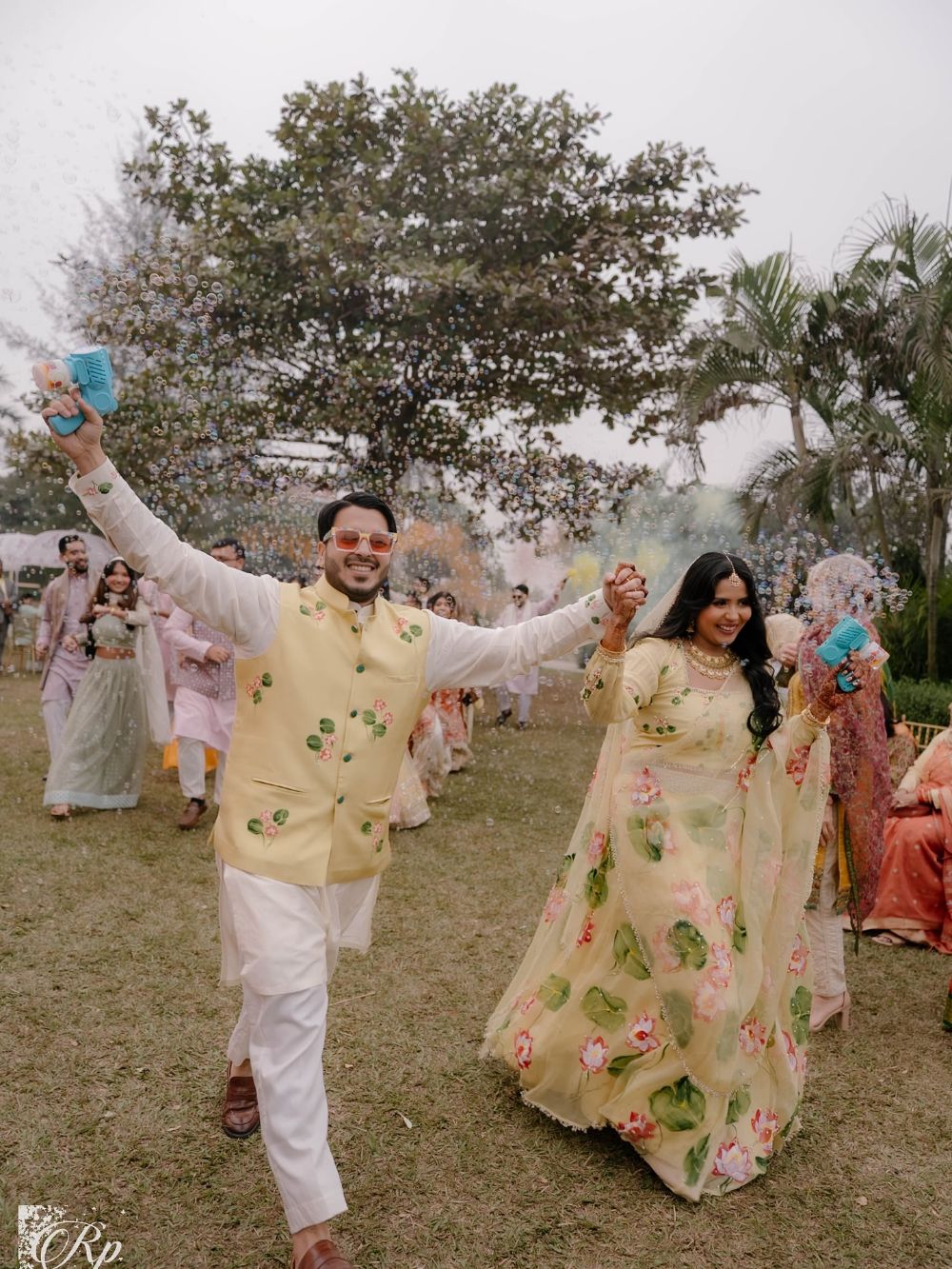
She had no bridesmaids, but she was never alone on her wedding day
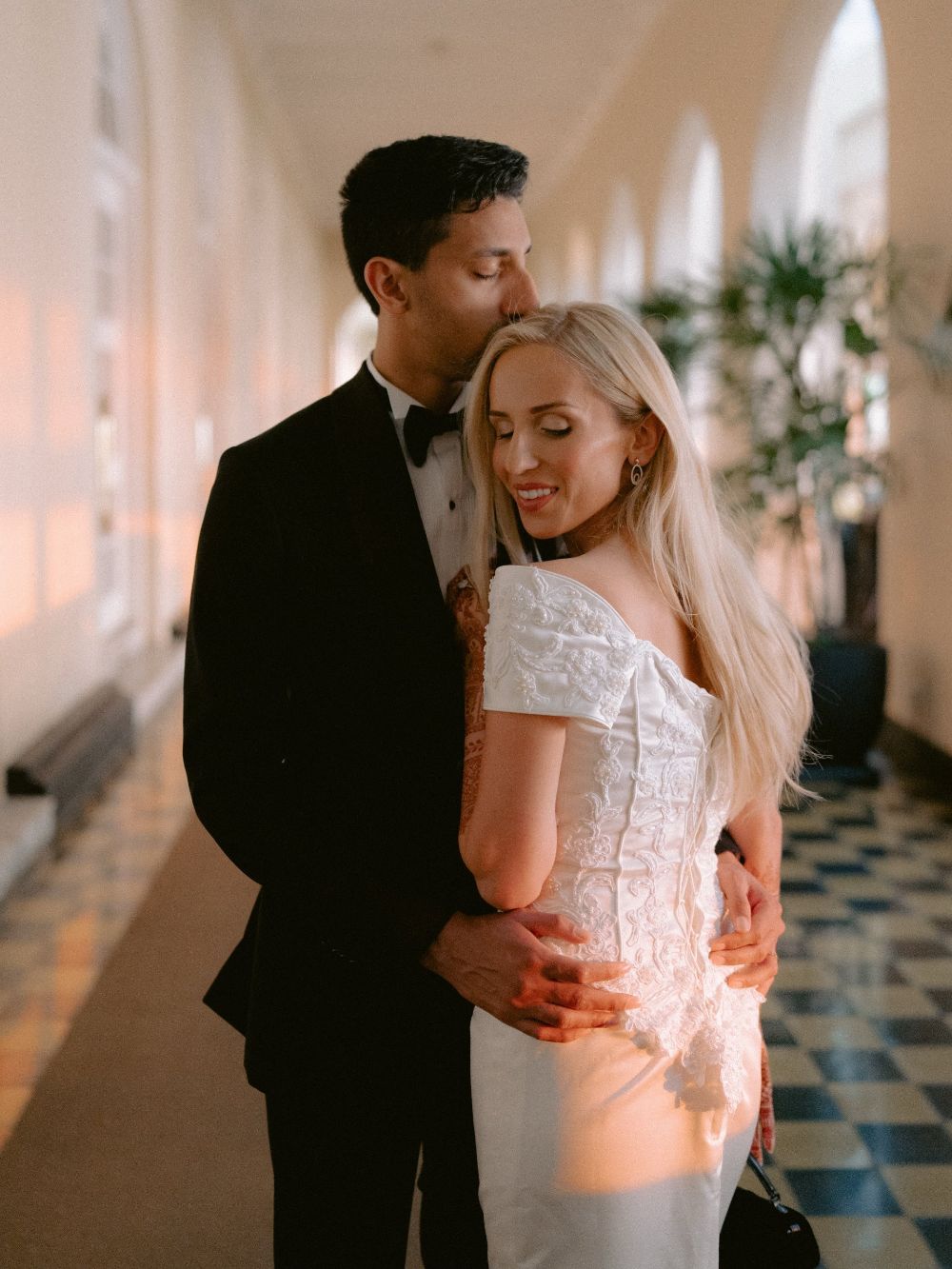
Natalia comes from a family where weddings aren’t particularly elaborate affairs. You put on a white dress, go to the courthouse, sign the papers, and that’s that. She and her husband, Karan, had done exactly that two years earlier, and as far as Natalia was concerned, they were already married.
Karan, however, is from Chennai, where weddings tend to be rather more of a grand affair. So while Natalia might have been perfectly happy with their courthouse ceremony, a larger celebration was always on the cards. The question was where to have it.
India was quickly ruled out, largely because of the thousand-person guest list it would invite. Mexico was another possibility, but finding the infrastructure for a traditional Indian wedding proved difficult. The packages they came across seemed to include very little of what they actually needed. Then Karan’s mother suggested Sri Lanka. It was a short flight from Chennai, and finding Hindu priests would be considerably easier. They finally had a destination that made sense.
They also had six months to plan it.
By then, some of the venues they liked were already booked. Karan had always imagined getting married by the beach, but the hotel they loved in Colombo, ITC Ratnadipa, didn’t have one. Rather than compromise, they split the three-day festivities across two properties, with the wedding ceremony taking place at the colonial Galle Face Hotel that offered the beach, and the other celebrations at ITC with its skyline views.
With guests flying in from the Middle East, South America, North America and Europe, Natalia was determined that everyone would be properly looked after. She interviewed several planners, including some whose weddings looked beautiful online but whose communication left her uncertain. She asked each for a rough estimate of what three days would cost, and the planner she eventually chose was the one who was most forthcoming with numbers and quickest to respond – Suranga.
For someone who describes herself as a Type B personality, Natalia was proving surprisingly thorough.
Then the first mood boards arrived, and she discovered she had rather more opinions than she’d anticipated. The designs felt too familiar. Green and yellow florals for the mehendi were precisely what she didn’t want, so she opened Canva and started making her own references.
She discovered she had rather more opinions than she’d anticipated.
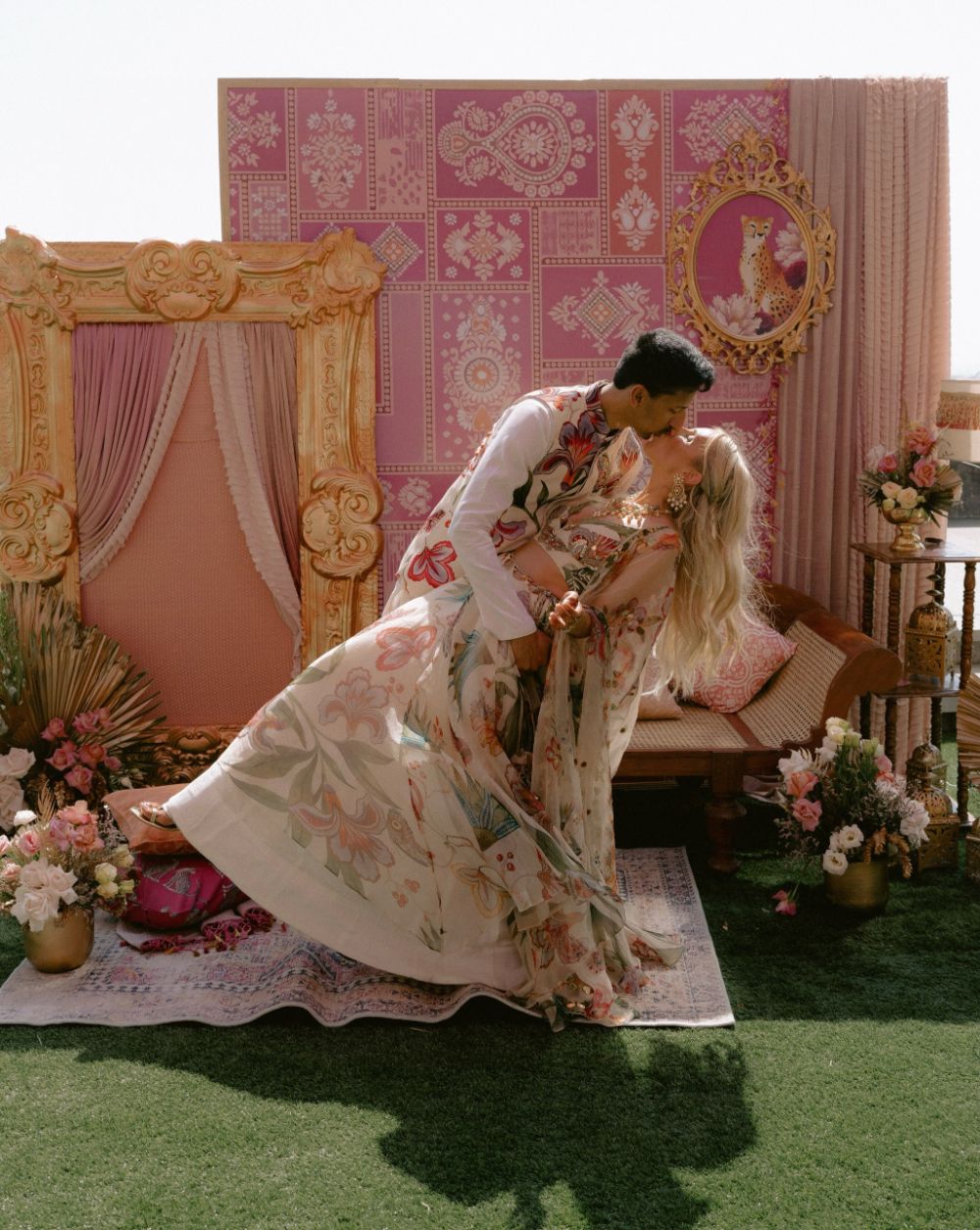
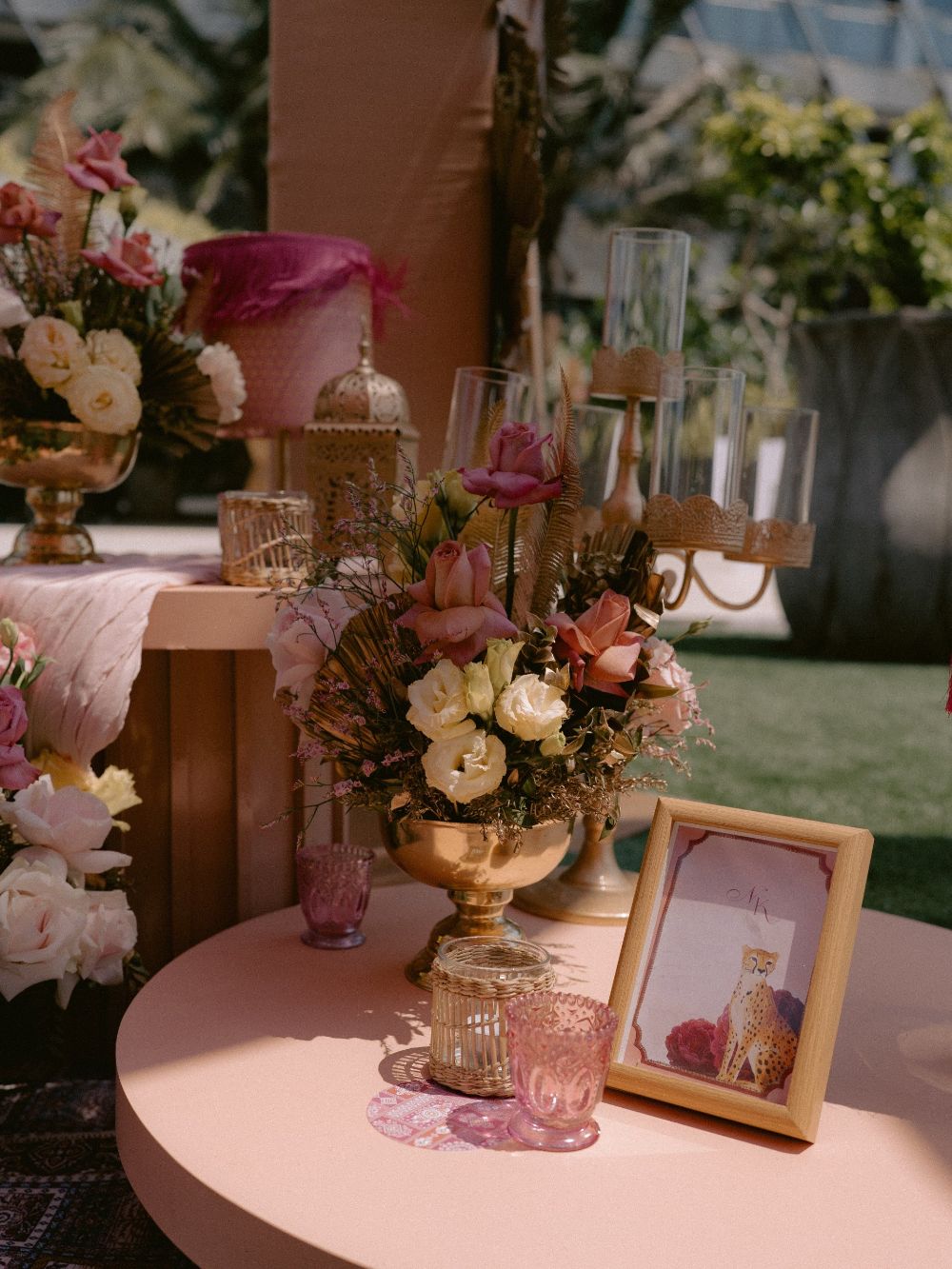
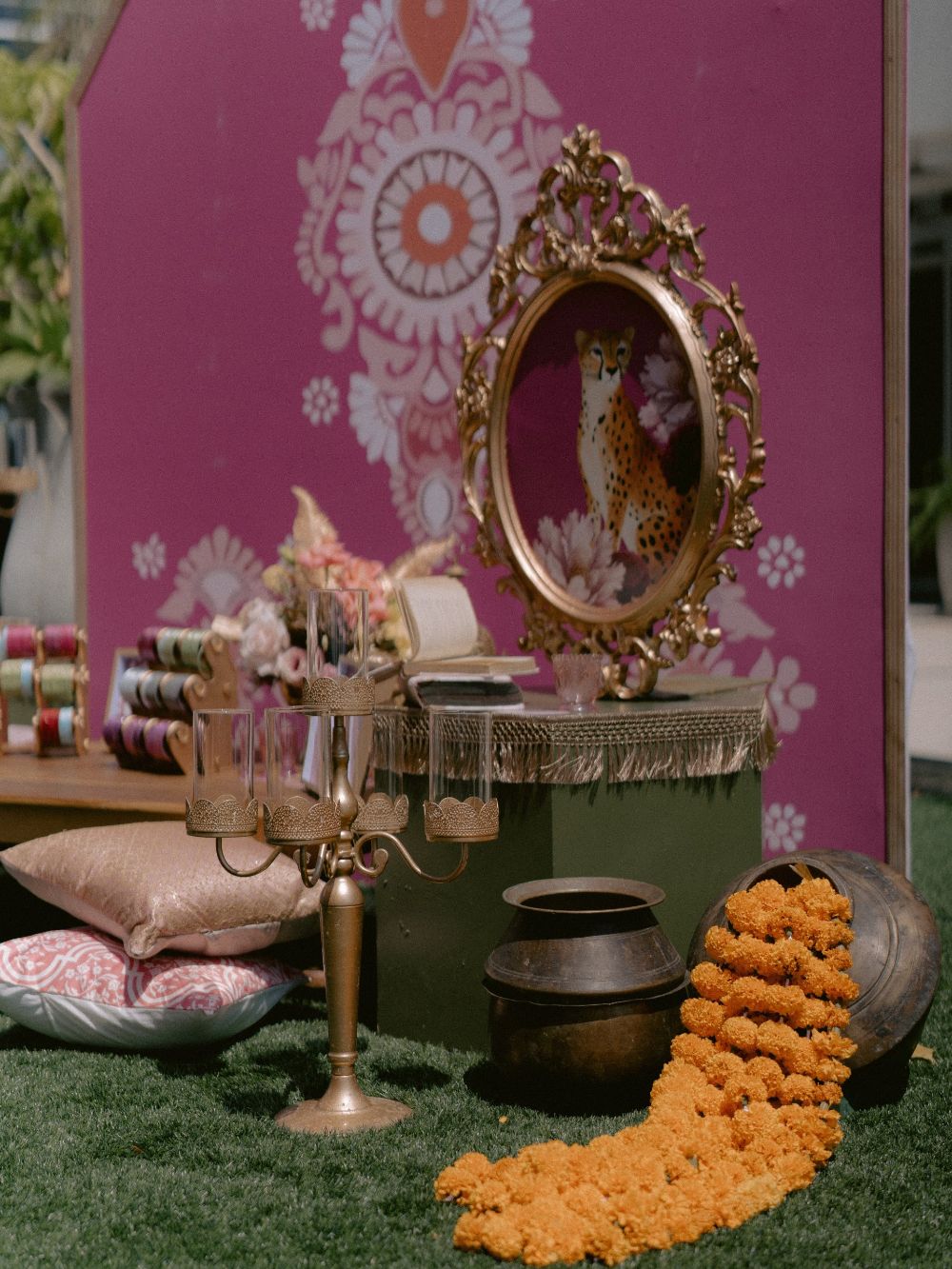
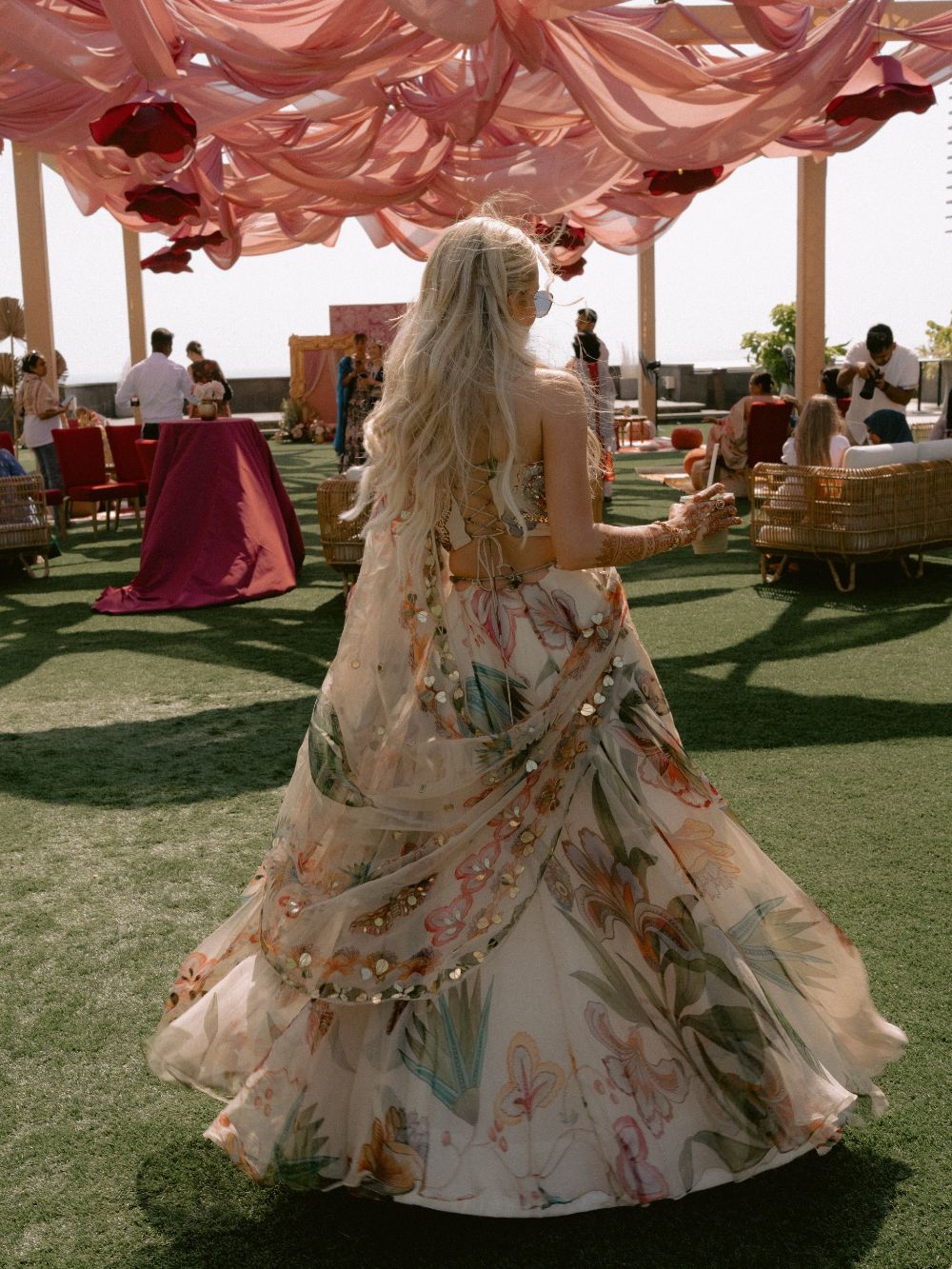
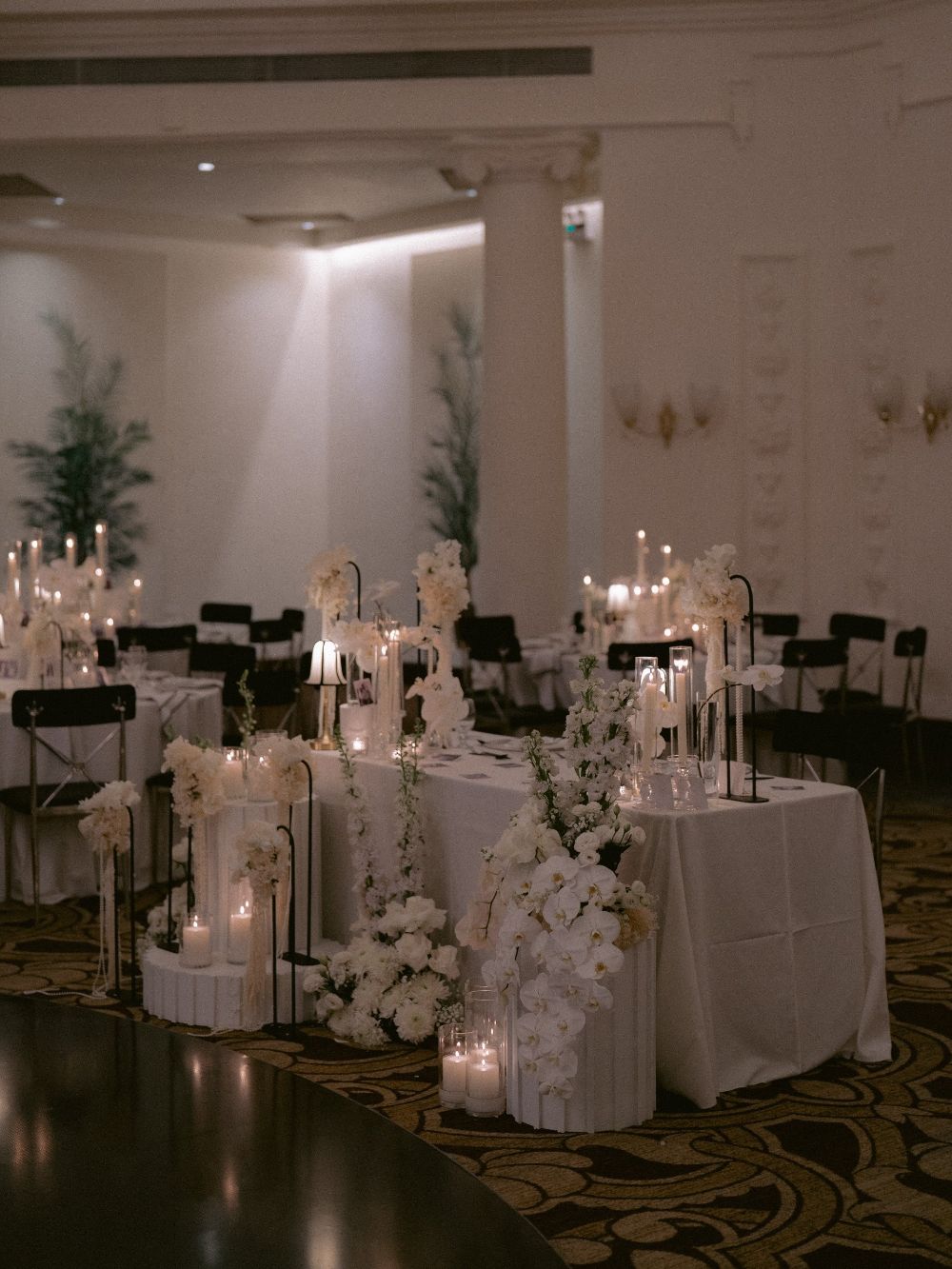
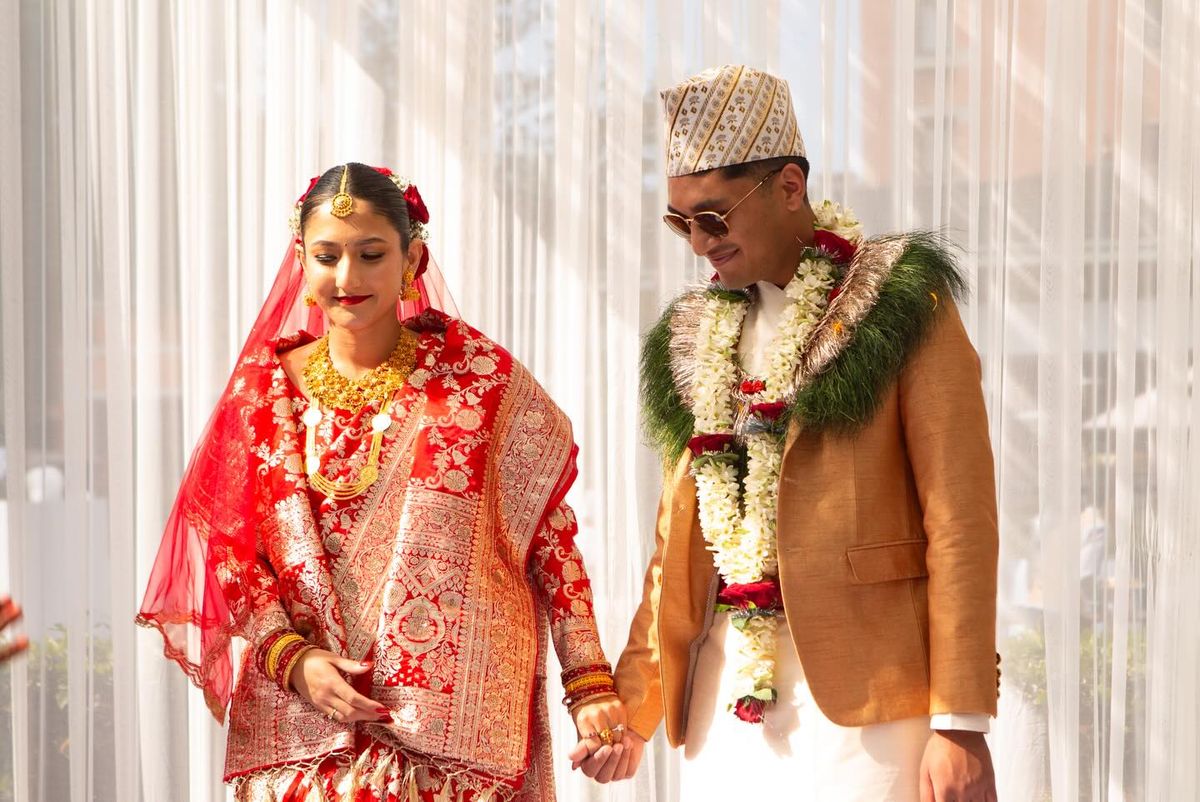
Natalia’s parents are antique dealers, and she’d grown up surrounded by art and objects with history. She wanted gold frames and European artifacts, peach and mauve for the mehendi, and references to the leopards and tigers associated with her husband’s home. There would be a peacock somewhere in the decor, a little Sabyasachi, a little Masaba. The Hindu ceremony would remain traditionally South Indian, while the reception would be entirely black and white, right down to the guests’ dress code. She even designed the wedding invitations herself, bringing the same personal approach to the first thing her guests would see.
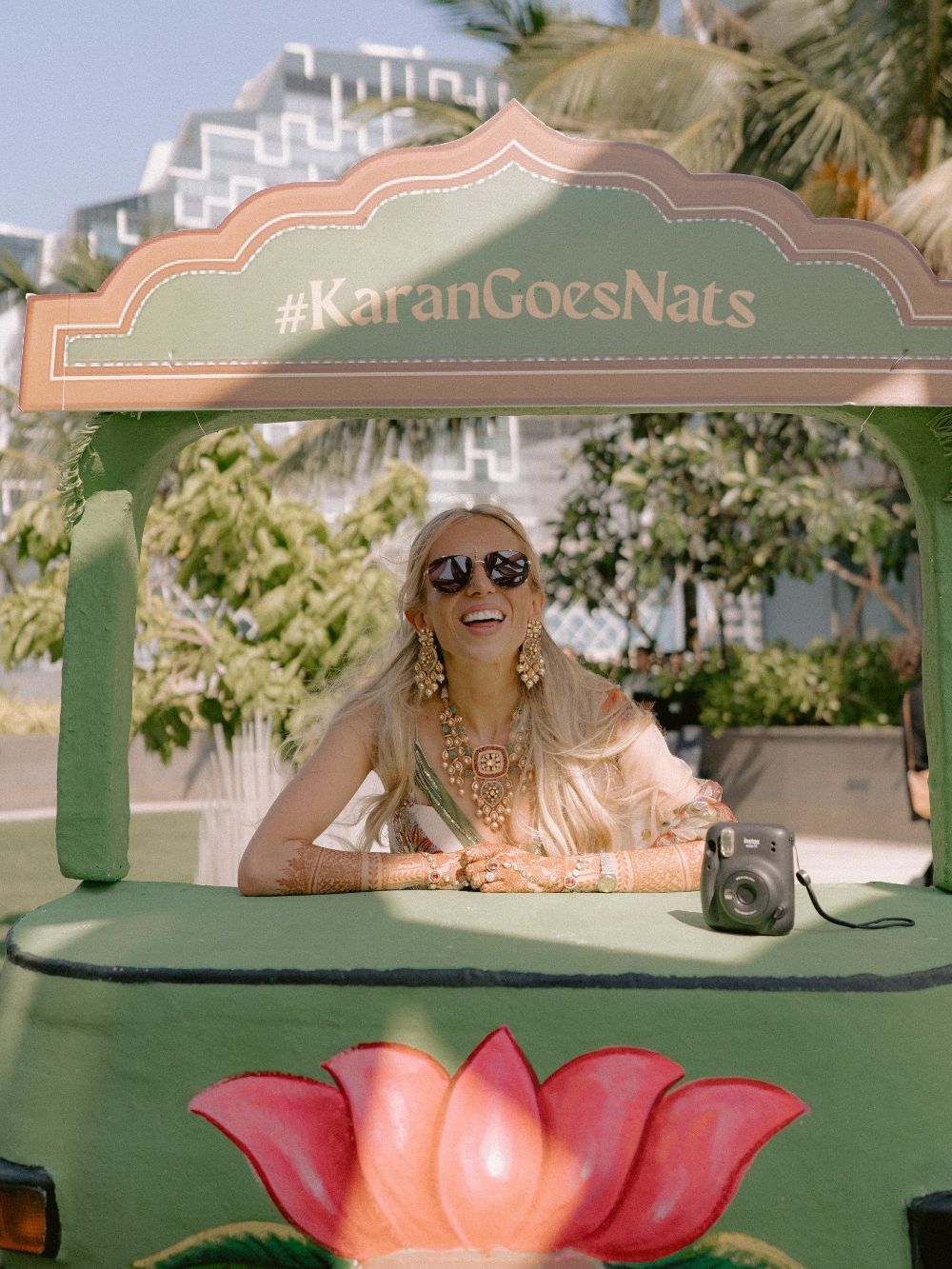
She sent her ideas back to Suranga’s team, who embraced them and began figuring out how to bring them to life. And they went further than she’d imagined. The gold palm trees she’d saved from Pinterest appeared at her mehendi. A rickshaw was built to match the design she’d sent. The substantial wooden mandap was constructed in the middle of the night. Natalia had seen the sketches beforehand, but she thought the finished installations were even better.
The experience also showed her the value of working with people who could take an idea and work out the practicalities. From the beginning, Suranga provided itemized quotations, so Natalia could see exactly what she was paying for, from the number of fans to individual decor elements. The figures changed as she added and removed things, and the final amount was settled about a month before the wedding, but she always had a reasonable sense of what the celebrations would cost.
And Natalia wasn’t afraid to question a price. When she received the quotation for jasmine garlands to decorate the wedding chairs, she opened Uber Eats, found garlands selling for a few dollars and sent the screenshot to her planner. She could practically order them herself, she pointed out. The team was equally willing to find savings elsewhere. She’d initially dismissed ceiling drapes as an unnecessary expense, reasoning that nobody spent much time looking up, but they eventually found a way to include them for less.
She could practically order them herself, she pointed out.
It helped that Suranga’s team understood her priorities, even when they were rather specific. For the black-and-white reception, Natalia had chosen a bright yellow welcome cocktail. Suranga pointed out that the drinks would introduce a rather unexpected splash of color into the photographs, so they agreed to take the room pictures before the cocktails were served. It was a small detail, but exactly the kind of thing Natalia appreciated – someone thinking through how her choices would work together, rather than simply saying yes to everything.
That collaborative approach also extended to the vendors. Suranga’s team provided shortlists of people they’d worked with before, sometimes ten or twenty options at a time, but Natalia was welcome to bring in her own discoveries. She found videographer One Weddings through social media, along with a matcha vendor – Zen Sips, who created custom flavors inspired by the couple’s two cats, their holidays in Mexico and life in Dallas. Her biggest splurge was photographer Ashane Bernard, while Brides by Leena offered her a favorable makeup package covering all the days she needed.
One of her more unusual finds was the priest. Finding a Hindu priest who could conduct the ceremony in English was proving difficult, until Natalia came across someone posting in English on Facebook. She messaged him directly to ask whether he was a priest and whether he spoke English. When he confirmed both, she introduced him to Suranga, and the team took it from there.
For Natalia, that was one of the great advantages of having a planner. She could find something she liked, ask a question or make a decision, and someone else would handle the coordination that followed. It mattered particularly because, despite being married to an Indian man, she was still learning how Indian weddings worked.
She’d attended perhaps five weddings in her life and hadn’t even realized that the mehendi was traditionally held the day before the ceremony. There were plenty of things vendors assumed she already knew, and she found herself needing explanations for decisions she hadn’t realized she was supposed to make. Even the hotel room bookings became unexpectedly complicated when the properties sent an Excel spreadsheet instead of a booking link she could forward to guests. She couldn’t exactly send a spreadsheet to every auntie traveling in for the wedding.
It’s why she now believes first-time brides need planners who are willing to be almost overly descriptive. What seems obvious to someone who organizes weddings every weekend may be entirely new to the person getting married. Natalia didn’t need someone to make every decision for her, but she did need someone who could explain the options and take care of what happened after she’d chosen.
And when the celebrations finally arrived, she discovered just how much that support mattered.
Natalia had decided not to have bridesmaids. With friends traveling from so many different parts of the world, she didn’t want to single out a few people as more important than the others. But she was hardly left to manage things alone. Four women from Suranga’s team were with her throughout the celebrations, helping her get ready, finding missing earrings, waking her at two in the morning and taking care of the small things she no longer had the time or hands to manage. At one point, one of them spent the day holding a purse Natalia had brought to complete an outfit but had no practical reason to carry afterwards.
“I was really taken care of,” she says.
I was really taken care of.
For all the Canva mood boards, vendor research and questions about pricing, Natalia remembers being remarkably relaxed once the wedding began. She’d even arranged a Pilates class overlooking the ocean, and found herself enjoying the celebrations rather than worrying about what came next. When she realized she’d forgotten to bring a drive for the raw footage, her videographer simply bought one and delivered it to the hotel. Her lipstick didn’t quite survive the Sri Lankan heat, and she remembers being so thirsty afterwards that she finished an entire coconut. Otherwise, there was very little to worry about.
Having experienced what it takes to bring together three days of celebrations, Natalia can’t imagine planning a wedding of that scale without professional help. A single-day wedding, perhaps. But not several days, multiple venues and guests arriving from four continents.
Her advice to other brides is to enjoy the process, even when something doesn’t go exactly as planned. A mishap, she says, reflects the circumstances, not the bride.
And for someone who’d started out thinking a courthouse ceremony was quite enough, Natalia ended up with something rather wonderful: a wedding full of the details she’d imagined, and the freedom to enjoy them. She’d chosen not to have bridesmaids, but there was always someone nearby when she needed a hand. Sometimes quite literally, holding her purse.