They wanted a courthouse wedding. Lake Como had other plans.
Tiffany and Marcelo don’t celebrate their birthdays. They aren’t particularly comfortable with being the center of attention, which is why their original wedding plan was a courthouse ceremony followed by a dinner party. Tiffany had also watched friends become so consumed by wedding planning that they barely seemed to enjoy being the couple getting married, and she wanted none of that. Then she began to suspect they might enjoy a formal celebration, particularly with family and close friends, and the courthouse idea gradually became something nice, but small.
She was determined not to get carried away. Having worked at Meta, Tiffany knew how easily inspiration could turn into an endless list of things to prioritize. Rather than begin with Instagram, she started with the guest list and worked backwards. They wanted around thirty people, which ruled out many venues immediately. Some were too large, others too extravagant, and several required a three-night booking when they only wanted one wedding day. They also needed somewhere accessible to guests traveling from the US and Brazil, where Marcelo’s family lived, with summer weather that wouldn’t be unbearably hot or humid.
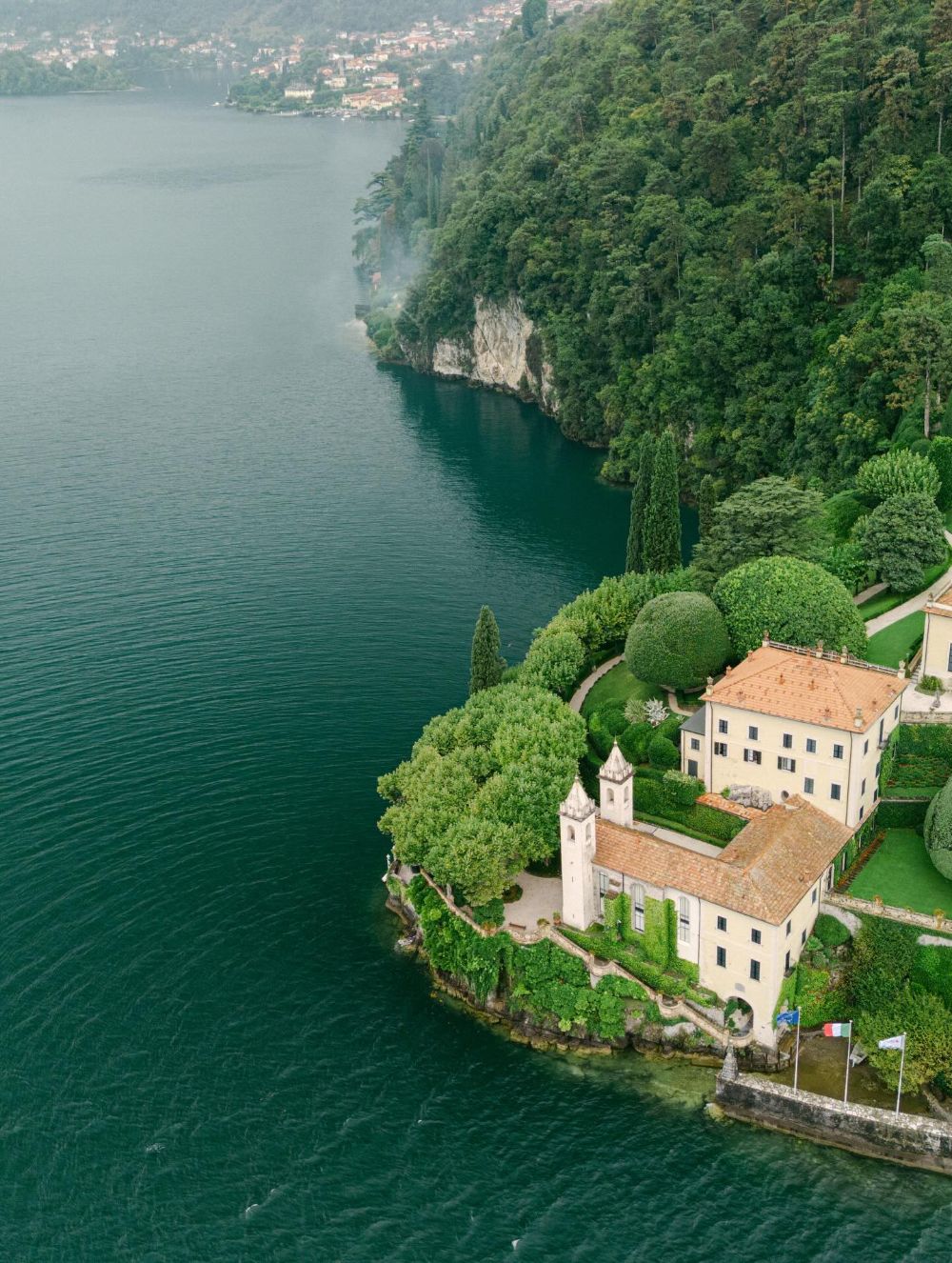
The search eventually narrowed to Europe, then Italy and France, and finally Lake Como. They’d traveled through Italy together early in their relationship. Friends of friends had married at the venue they chose, which gave them confidence in booking somewhere unfamiliar. It was beautiful, but as a historically preserved property it came with restrictions they hadn’t fully anticipated. There was a shortlist of approved planners and vendors, limited accommodation nearby, and no public boats serving the property. Guests and supplies would need to arrive by private charter boats, making a wedding of thirty people rather more logistically involved than either had imagined.
Tiffany approached the planning as a second job, complete with spreadsheets. She emailed vendors in batches to understand prices and availability, finding that about half were already booked. She read Reddit threads where brides shared budgets, kept her own budget tracker and created separate comparisons for each vendor. She wanted to consider multiple options, rather than relying on the planner to recommend one vendor as the only option.
For the planner, they asked the venue’s events manager for recommendations. The first planner knew the property well and appeared able to negotiate exceptions to some of its restrictions, including boat arrangements and guest-number requirements. She spoke English comfortably and agreed to Tiffany’s expectations around response times. Initially, everything seemed promising, but as planning progressed, replies became slower and unanswered questions began to accumulate. By the third month of planning, communication stopped for multiple weeks at a time. For a bride planning across time zones, at a venue she’d never visited, the uncertainty made even small decisions difficult. Eventually, they decided to part ways.
They returned to the venue’s approved list and interviewed five more planners, this time with a much clearer idea of what mattered. How quickly did they respond? When would they be unavailable? Were they comfortable with a couple who wanted to compare several quotations before committing? Tiffany also asked about working styles, having realized that a planner could be good at organizing weddings and still not be the right fit for her.
She wanted to consider multiple options, rather than relying on the planner to recommend one vendor as the only option.
They eventually chose a planner who was originally from London and now based in Lake Como. She understood the market, was accustomed to international clients and, most importantly for Tiffany, communicated consistently. She also took charge of the boats, which were among the most complicated parts of the wedding. Charter companies could run late, weather could change quickly, and the entire guest schedule depended on getting people across the lake.
The budget brought another education. The venue price was only the beginning. On top of it came the planner, furniture rentals, transportation, other services. Friends who’d married before warned Tiffany that the final cost could be as much as twice the original estimate, so she built in contingencies rather than treating the first quotation as the total. The most useful resource she found was a Reddit post in which another bride had broken down her entire wedding budget by vendor. She looked for another account as detailed and never found one.
By the time the wedding arrived, Tiffany had researched almost every decision, changed planners and learned more about private boat charters than she’d ever expected. She also knew that no amount of preparation could guarantee everything would go smoothly. “We went in knowing that something was probably going to go wrong day of,” she says.
And something did. A summer storm complicated the boat arrangements, and a guest who fell ill with food poisoning needed to leave by emergency taxi. The venue, ordinarily accessed by water, made an exception for a car to reach the property. It was precisely the sort of situation that made Tiffany grateful to have a planner with someone local who understood the venue’s rules and knew how to navigate them.
We went in knowing that something was probably going to go wrong day of. We looked for a planner who would proactively navigate it.
You don’t quite understand how much work it involves until you’ve been through it, and even thirty guests can require an extraordinary amount of coordination. She’s happy to share everything she learned with friends and other brides, particularly the questions she wishes she’d known to ask before hiring a planner or committing to a venue.
She and Marcelo had wanted something small because they didn’t want their wedding to take over their lives. They kept the guest list to thirty, but discovered that the size of a wedding doesn’t necessarily determine how complicated it is. What mattered in the end was having someone they could rely on when the unexpected happened, so that when a storm rolled across Lake Como, Tiffany wasn’t the one trying to find a boat.