It takes a village to plan a wedding, and hers stretched from Kathmandu to Chicago
Planning a Nepal wedding from Chicago, with cousins as her eyes on the ground and friends flying in from three continents.
“Is anyone else getting married in Nepal?” That was the question Ushma kept wanting to ask someone, anyone, while she planned her wedding from Chicago.
Her close friends in the US hadn’t married yet, and the ones back home were a time zone and a whole life stage away. So she did what so many brides have done and still do. She spent ungodly hours of the night on Instagram, scrolling through the followers of a decorator’s page and messaging complete strangers to ask whether they’d been happy. The word she uses for those months is “solitary,” which is not a word anyone ever puts on a wedding moodboard.
None of it was new territory, really. Ushma had spent years building a life abroad on her own terms, including nearly a decade as a civil engineer. She is the kind of fiercely independent woman who is used to working things out for herself, and is very good at it. But she is also an only child, which meant this was the one wedding her parents would ever get to give. Without her quite noticing, a village began to gather around her. Her cousins in Kathmandu became her eyes and hands on the ground, and her parents threw themselves into every detail. Her friends, scattered across the US and Europe, were quietly clearing their calendars to be there.
Together they decided the wedding would be three days: a mehndi to kick-start the celebrations, the actual ceremony, and a reception to wrap it up. The most important thing for Ushma was that her grandparents would be able to attend all of it and be comfortable, without long drives across the city. Her cousins toured a couple of places, and within two weeks they had finalized Yak & Yeti for the wedding and the reception, chosen for its old-world grandeur. The mehndi would be held at the Malla Hotel.
Without her quite noticing, a village began to gather around her.
The hardest decision of all, though, was finding the decorator. In Kathmandu the decor houses are also the planners, and they shape nearly everything your guests will see and experience. Ushma spent many late nights weighing a handful of the city’s best-known names. She spent many more messaging brides who had worked with them, speaking to at least ten, most of them strangers, who were generous enough to tell her how their weddings had gone. What decided it in the end was Garima Decor. After a single call, they went to see her venues on their own and came back with ideas for every function before she had even asked. She knew then that they cared about her wedding as much as she did.
Three functions also meant three separate looks, and that may well have been the part she enjoyed most. The afternoons at Siwangi Pradhan’s studio became a family occasion of their own, with her parents and cousins gathered around the fabrics, holding swatches against her while Siwangi steered them towards what would suit her. Everything that came out of those afternoons arrived on time and fit beautifully, which anyone who has planned a wedding in Kathmandu knows is its own small miracle.
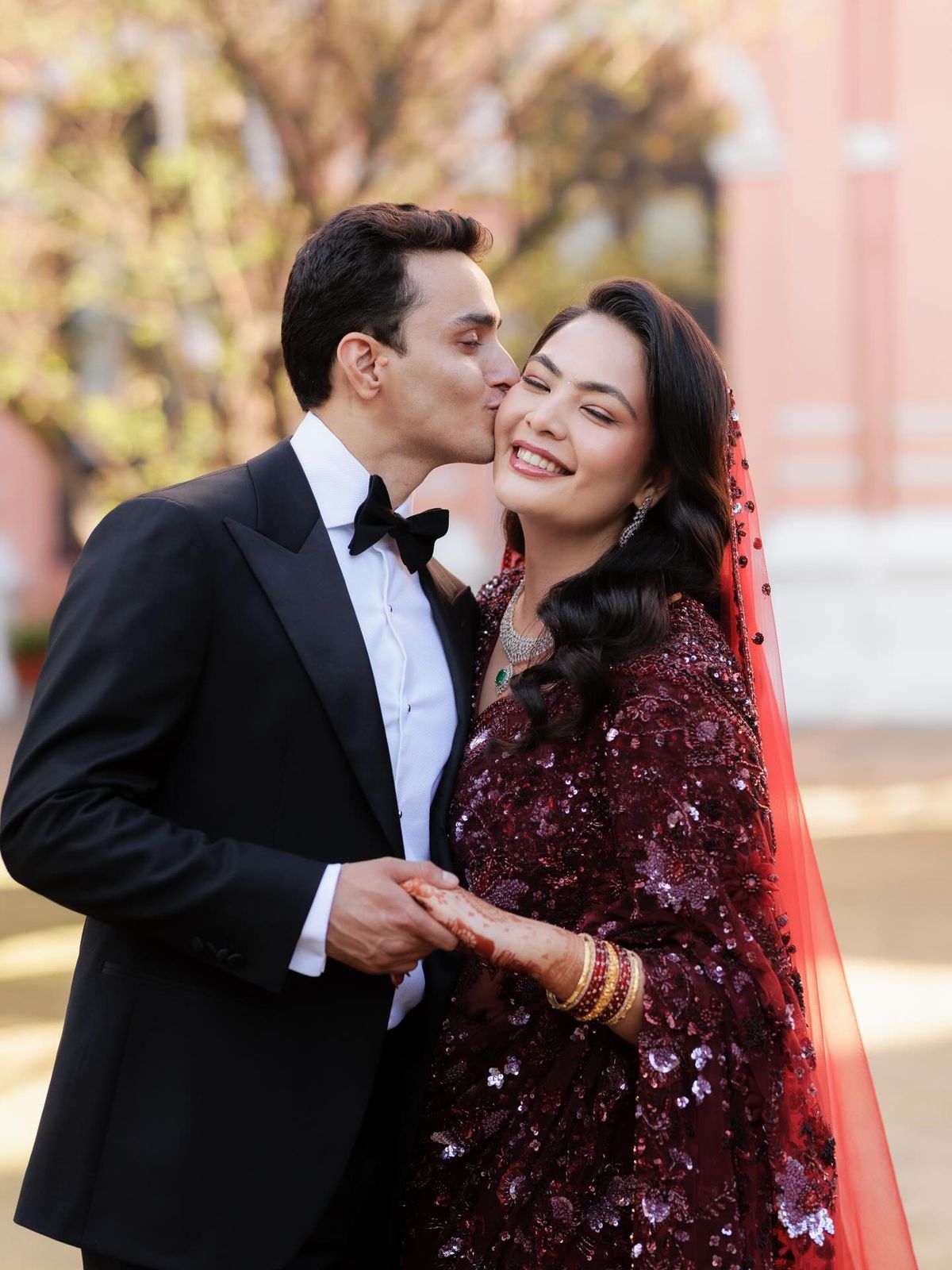
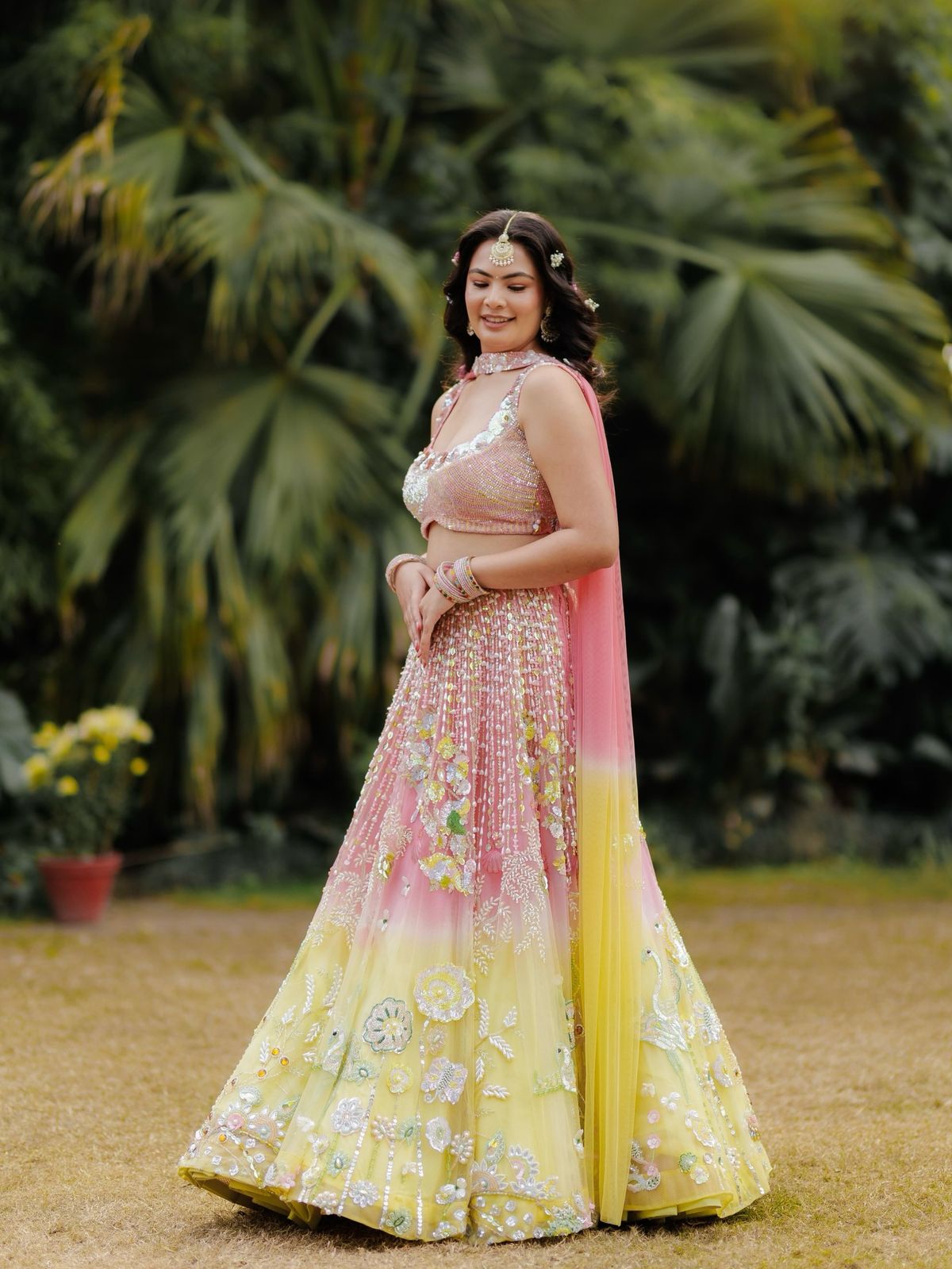
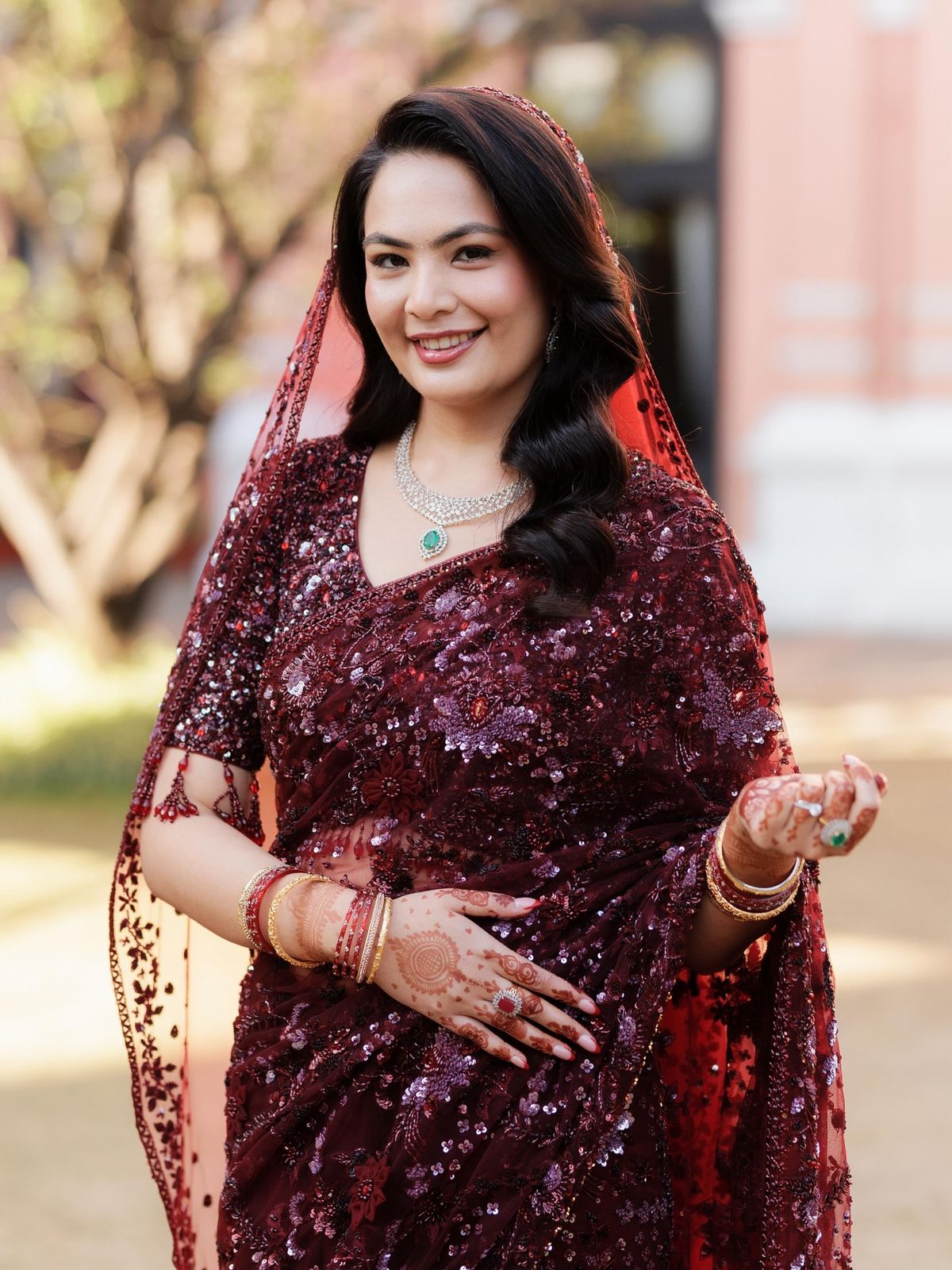
For the mehndi she chose a bright pink and yellow lehenga. For the reception she wore a burgundy saree, one of the first times she had ever worn that deep wine color, and a look she hadn’t known she wanted until she saw herself in it.
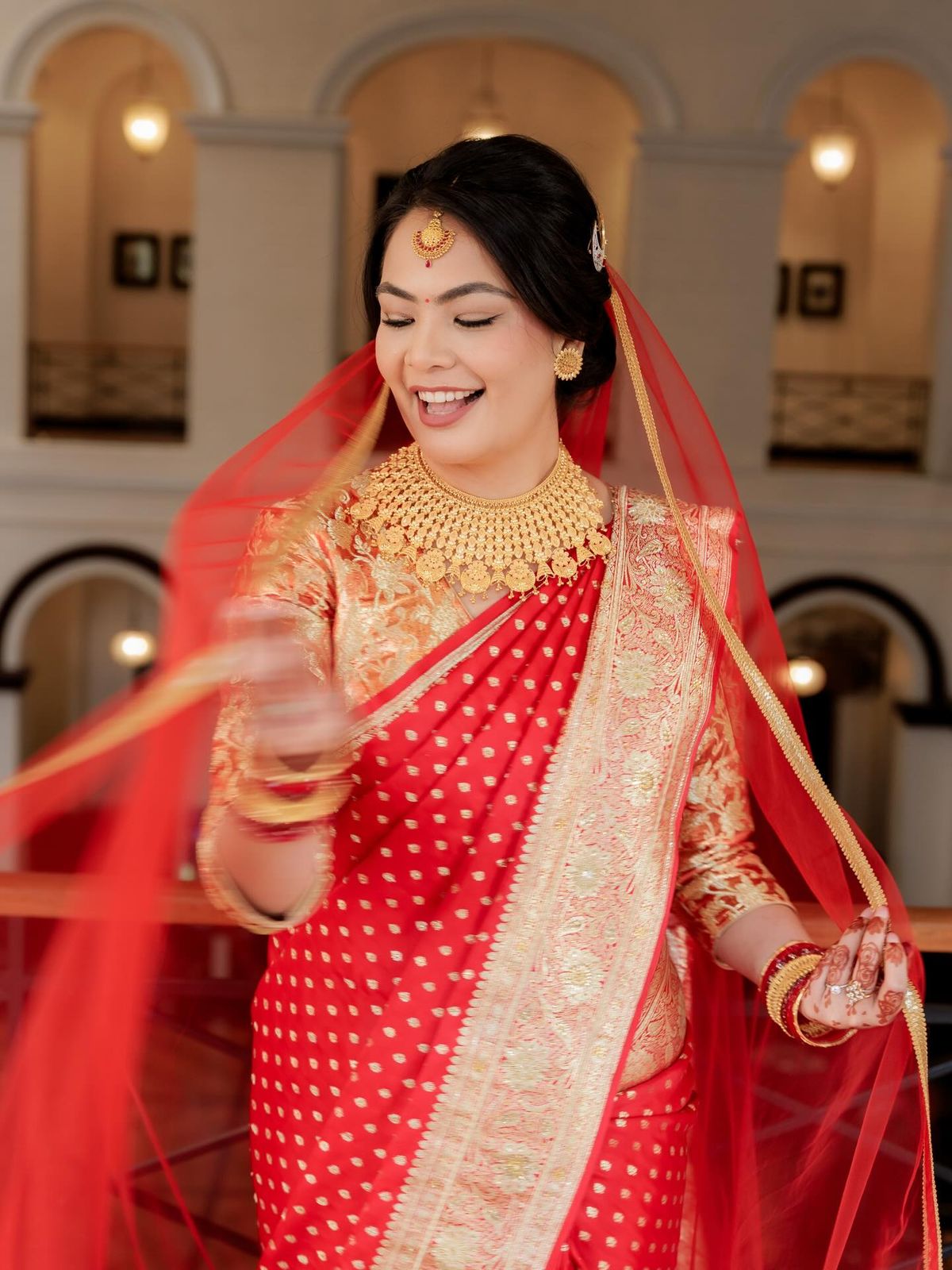
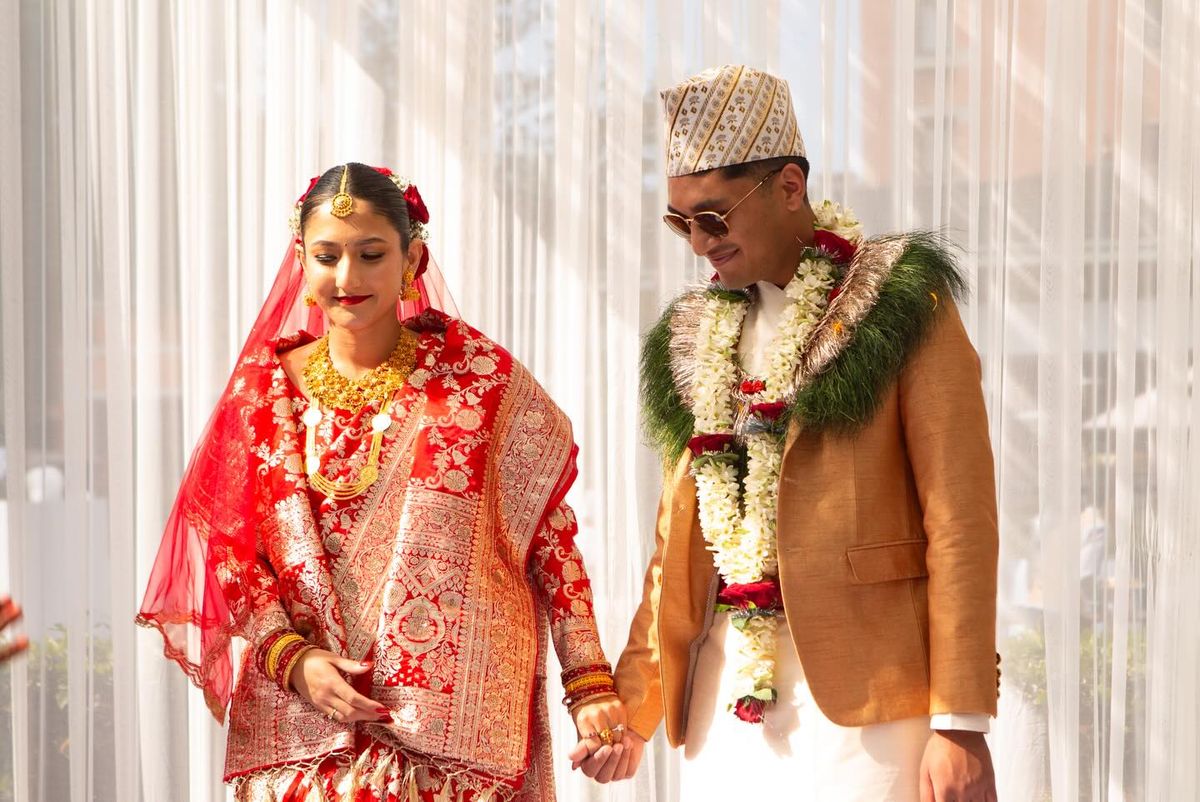
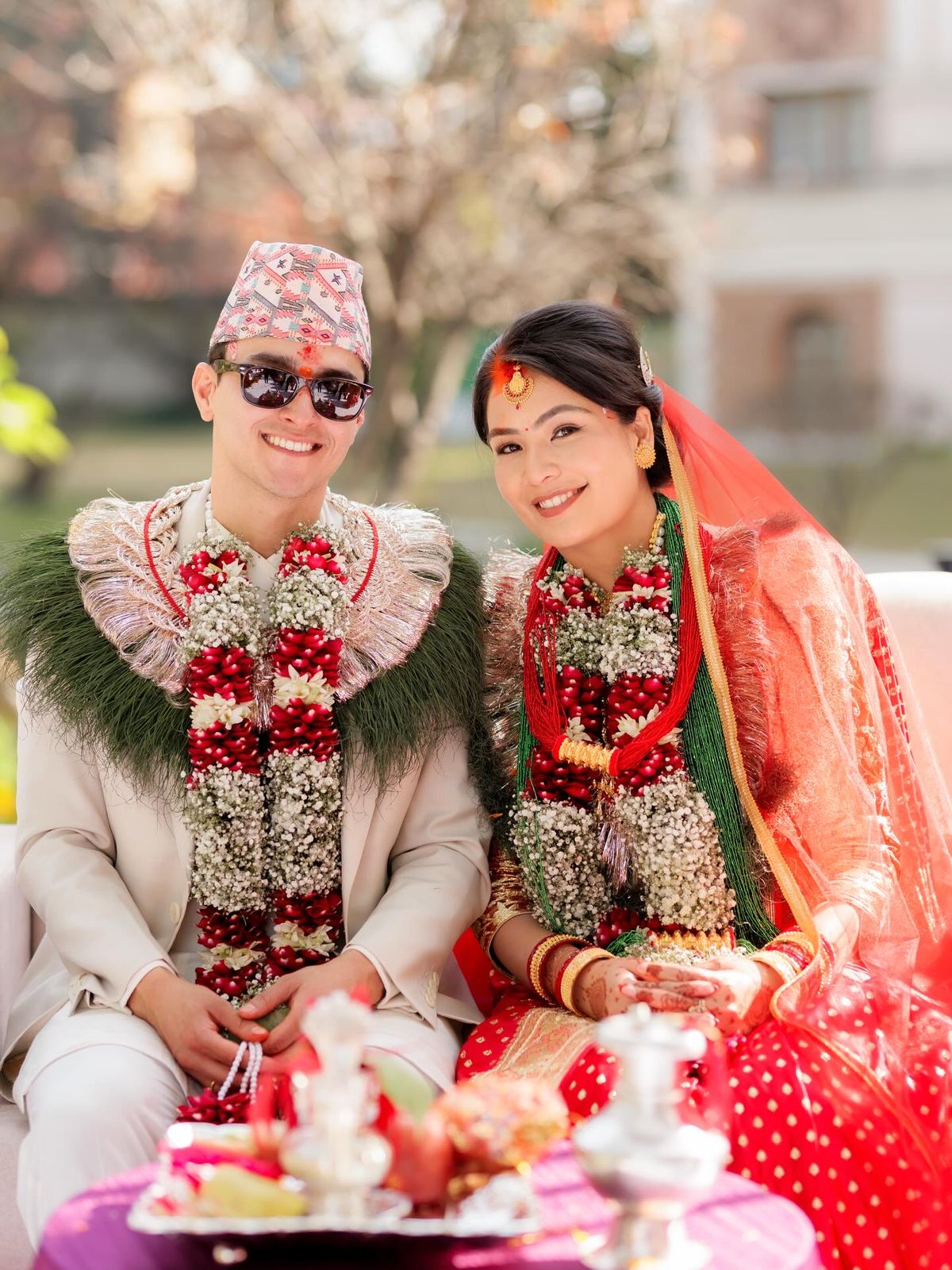
For the wedding itself, though, she chose to dress the way Newari brides have for a century, in a traditional red Benarasi saree gifted by her grandmother. Of everything she wore across those days, it meant the most. It carried the women who had come before her into a wedding that had been, for so many months, something she was building on her own.
When you’ve lived as international a life as Ushma has, your people come from everywhere. About twenty friends flew in from the US and Europe, including one bridesmaid who called from JFK in a panic about her passport. She still landed the night before the mehndi, jet-lagged and there.
No amount of planning covers everything, though, whether it’s a delay you didn’t see coming or another celebration set up right across from yours. What matters most is who is standing next to you when it happens.
On Ushma’s mehndi day, the lighting person didn’t arrive on time and the décor was still being finished as the first guests walked in. For a few anxious minutes, it felt like everything was slipping. But her friend Shreeya stayed right beside her until it all came together, exactly as Ushma had planned. And at the wedding, although seeing another celebration being held at the venue had initially stressed her out, it stopped mattering once Ushma sat at the mandap in her grandmother’s red Benarasi, surrounded by family and friends who had crossed oceans to be there.
Maybe that’s the strange thing about being the independent one. You can spend years figuring everything out on your own and be proud of it. The planning can still feel lonely at midnight, right up until the morning you look up and realize your village stretches from Kathmandu to Chicago and everywhere in between, and all of it is in the room.