Sara looked at every venue on the list. All twenty.
She’d found them on La Lista, a platform that lets you filter wedding venues by size and other criteria, and decided that if she was going to choose somewhere to get married, she might as well do the research properly. A McKinsey consultant, she built her own scoring matrix and worked through the options, one by one. This was before AI could do it for her.
Sara is British Pakistani, originally from Manchester, and her husband is a born-and-bred Londoner. They both loved Italy, which made it an appealing place to get married. There was also a practical advantage. Sara’s family was larger than her husband’s, and a destination wedding offered a way to keep the guest list balanced. They eventually celebrated with around eighty-five people, a number she felt was just right.
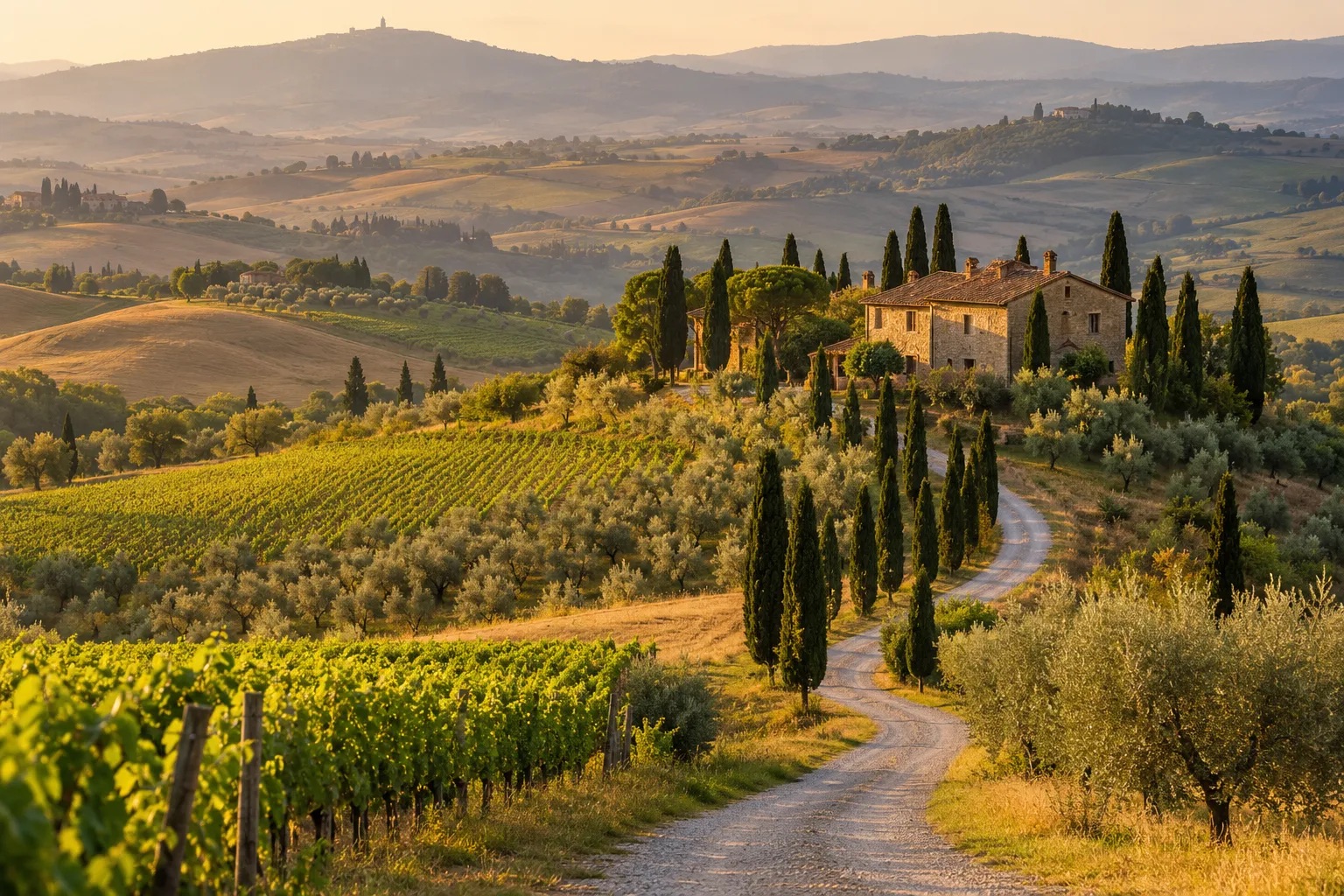
Having narrowed down the options, they booked three venue viewings and made it to two. They flew to Italy for a weekend in February, and the second property was a medieval village perched on a hill in Tuscany, available to hire in its entirety. They could imagine their friends and family spending the weekend there, and by the time they left, there was little point in seeing the third venue. They’d found their place.
Finding someone to plan the wedding was another matter. Sara had assumed they’d need a planner, but the quotations were considerably higher than they’d expected. So they decided to secure the venue first and figure out the rest afterwards. As luck would have it, the manager of the Tuscan property mentioned that she also planned weddings, taking on only a handful each year. She could offer the service for an additional fee that was much more reasonable than the prices they’d seen elsewhere.
It was an unusually good arrangement. The manager knew the property, spoke Italian, had relationships with local vendors and could review contracts in the language they were written in. For a couple planning from the UK, it removed several layers of uncertainty. Sara hadn’t thought to ask whether a venue manager might also be a planner, but she’d stumbled upon exactly that.
It was, she says, serendipity rather than design.
They booked the village about eighteen months before the wedding, although the serious planning began closer to nine or ten months out. By then, Sara had done the part she was good at: comparing options, making a decision and finding someone she trusted. What followed was a rather different approach to planning.
Instead of sending Sara off to research dozens of vendors, her planner brought her three options for each major category. Three florists, three DJs, three photographers, all of whom had worked at the property before. She showed them portfolios featuring weddings at the actual venue, alongside prices, so they could compare both the work and the cost. At least one option in each category was reasonably priced, sometimes all three.
Sara and her husband could look elsewhere, of course, but they rarely felt the need. The vendors knew the property, the planner knew their work, and the options were good. “There’s only so much you can drive yourself to distraction worrying about these things,” she says.
There’s only so much you can drive yourself to distraction worrying about these things.
For a few things, Sara did venture beyond those recommendations. She found her own hair stylist and assistant, along with an Indian drummer she discovered on Instagram. Although the drummer never sent a contract, leaving them to hope he’d actually turn up on the day. Luckily, he did, and was brilliant. Their DJ also offered to bring a saxophonist friend for a few hundred euros more, conveniently adding him to the existing contract. And Sara decided to do her own makeup, since she couldn’t arrange a trial and didn’t want to risk getting the shade match wrong.
When it came to decor, however, Sara was happy to follow her husband’s lead. Colors and arrangements weren’t particularly her forte, and while she could choose flowers she liked, spending hours debating them wasn’t her idea of fun. Her husband had a better eye for those things and great taste, so he took the lead. Dress shopping was similarly painful. She loved the dress she eventually found, but getting there felt much like shopping for clothes on an ordinary day, only with considerably more pressure and options, given everything can be tailored for you.
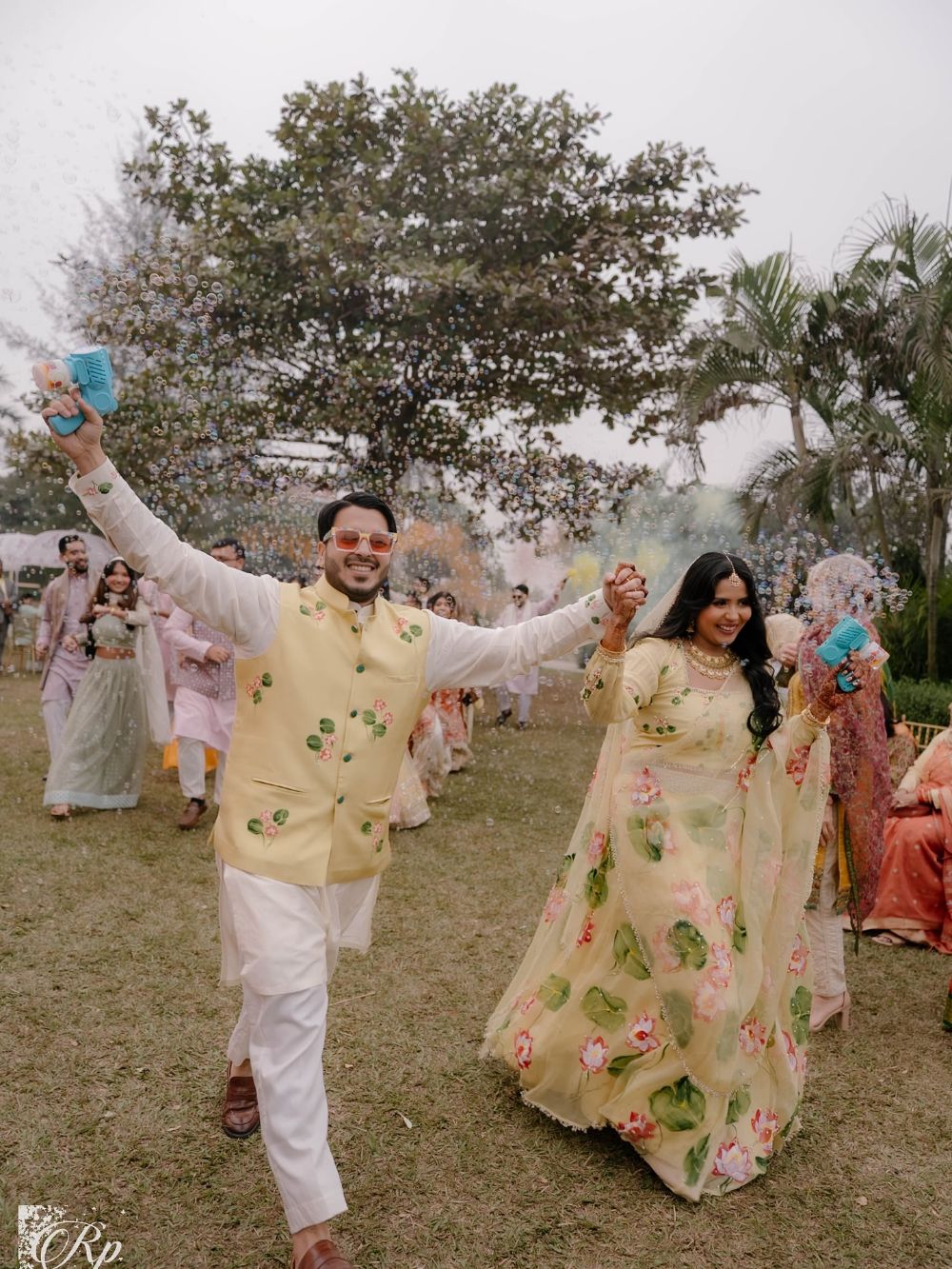
With the planning largely in hand, the weekend itself had a wonderfully informal feel. They’d booked the entire medieval village, so guests could settle in and enjoy themselves rather than travel between venues. Friday was a mehndi in the garden, with everyone invited to wear Pakistani clothes. Sara had even prepared slides explaining the traditions and what guests could wear, while her mother and aunts helped organize the mehndi supplies. When the garden’s Wi-Fi proved too weak for the Bluetooth speaker, they simply moved it somewhere it worked. It was the sort of small adjustment that suited the atmosphere – nobody made much of it, and the celebrations carried on.
That same easygoing spirit continued into Saturday. Rather than a frantic wedding morning, guests began the day enjoying the pool before getting ready for the white wedding. Sara had hoped for exactly that sort of relaxed weekend, although she’d made one scheduling decision she wouldn’t repeat. They’d arranged the ceremony rehearsal for that morning, and it ended up taking half an hour out of her getting-ready time. Looking back, she would have held it the previous day and left the wedding morning alone.
Having a team that knew the property also meant that some of the loveliest details came together without Sara having to think about them. They were the last wedding of the season, and the florist decided to add more flowers because she thought the arrangements would look better. The planner contributed green glasses for the tables for much the same reason. Neither charged extra. They simply wanted the setting to look its best, and Sara was delighted to let them.
They simply wanted the setting to look its best, and Sara was delighted to let them.
Of course, trusting someone didn’t mean every detail went exactly as she’d specified. Sara had prepared a spreadsheet assigning guests to each of the village’s thirty rooms, but the planner had placed people in appropriately sized rooms without following her exact assignments. Some guests ended up farther from the friends she’d intended them to be near, so Sara had the rooms changed. It was a little annoying, she admits, but hardly the end of the world.
And perhaps that’s what made the whole experience so enjoyable. Sara had been thorough where it mattered to her, but she hadn’t spent the months before her wedding trying to control every decision. She’d found people whose judgment she trusted, and for the most part, they’d rewarded that trust.
She was the first in her friend group to get married, and since then she’s found herself reassuring friends who are beginning the process. There are lots of options, she tells them, and lots of them are good. She’s happy to share her recommendations, but she also reminds them that they don’t need to exhaust every possibility before making a decision.
There are lots of options, she tells them, and lots of them are good.
Sara’s spreadsheet helped her find a medieval village in Tuscany. The rest of the wedding came together because she knew when to put it away.