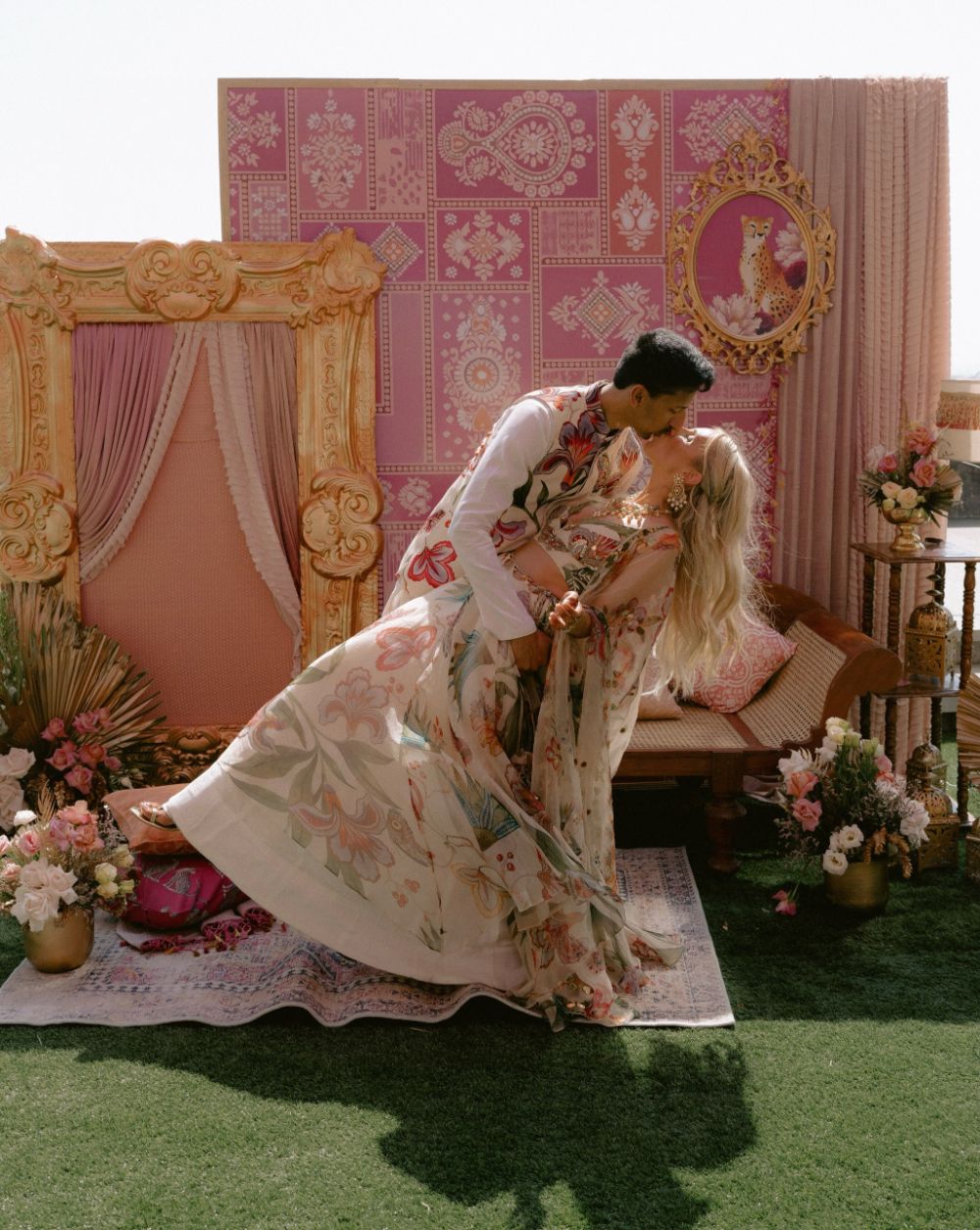
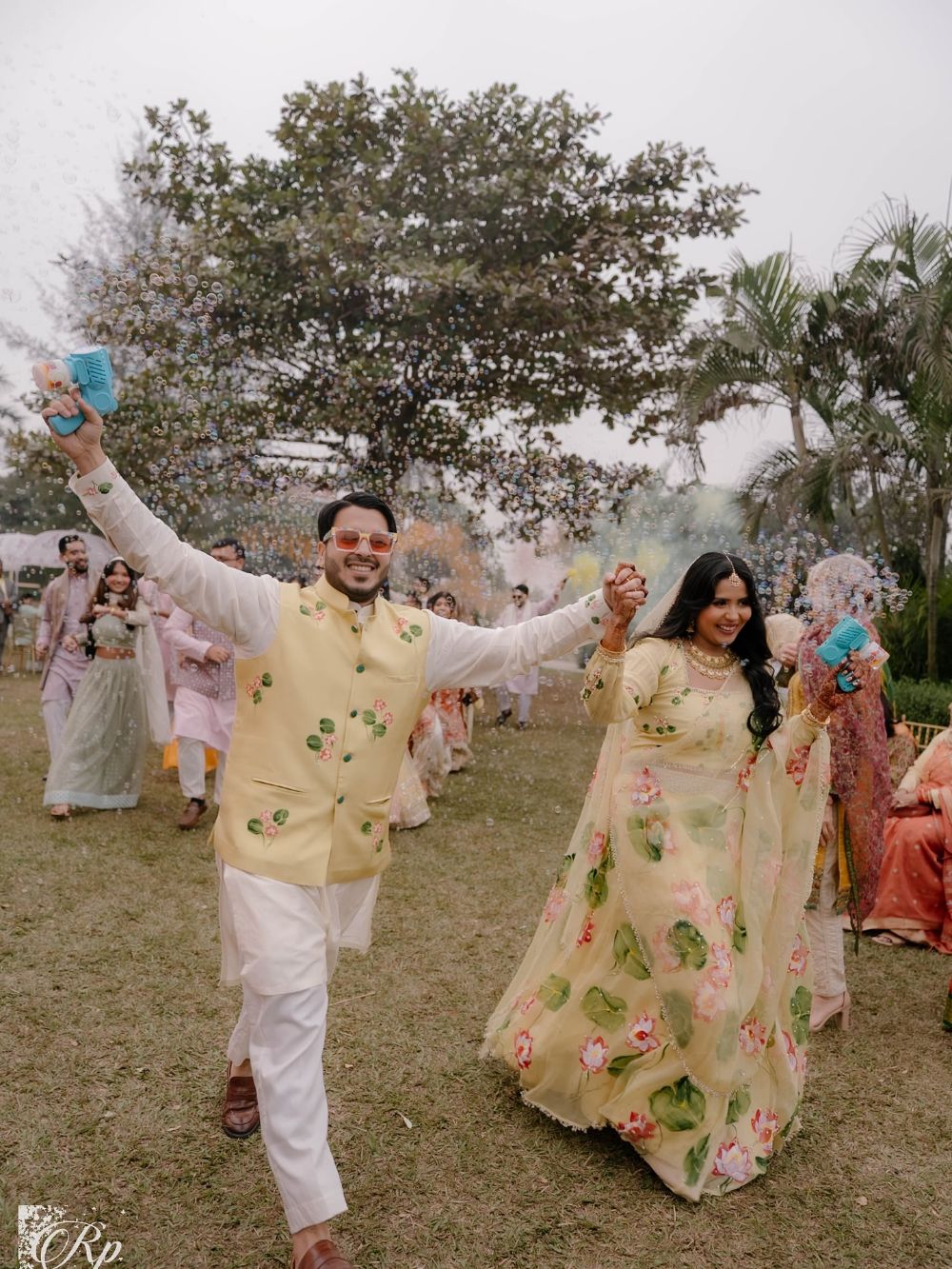
She never wanted a big wedding, and then she said yes to every single thing
Kusum never wanted a big wedding. She’d like that on the record.
She grew up in Kathmandu and has lived in the US for twelve years, most recently in Connecticut, where she met her husband, who is Chinese American, online. They were already legally married, and she was happy to leave it there. She was in radiology school, he was in residency, and between their careers and studies, a wedding was hardly a priority.
Her mother, though, had other ideas.
Kusum is an only child, and through cancer treatment and later recovery from a minor accident, her mother kept returning to the same question: when is the wedding? Eventually, Kusum gave in. And if her mother wanted a wedding, she would give her a grand one.
She was confident she could find a way to pull it off without losing her sanity. How hard could it be?
The first problem was the calendar. A Hindu wedding in Nepal has roughly ten auspicious dates a year, and her husband’s birth details narrowed them further. He had never written down his birth time, so they had to call Shanghai to find it. That left around five usable dates, and the wedding was already only eight months away. Most of the good venues were booked. Instead of choosing a date and finding a venue, she had to work backwards from whatever was available.
The second problem was distance. She was planning a wedding in Kathmandu from Connecticut, between a full-time job and school, answering venue messages at one or two in the morning. Her husband knew little about Nepali weddings, so most of the planning fell to her. Her best friend in Kathmandu became her eyes and ears, visiting venues and meeting vendors while Kusum joined on FaceTime.
“It was basically just two of us against all of this,” she says.
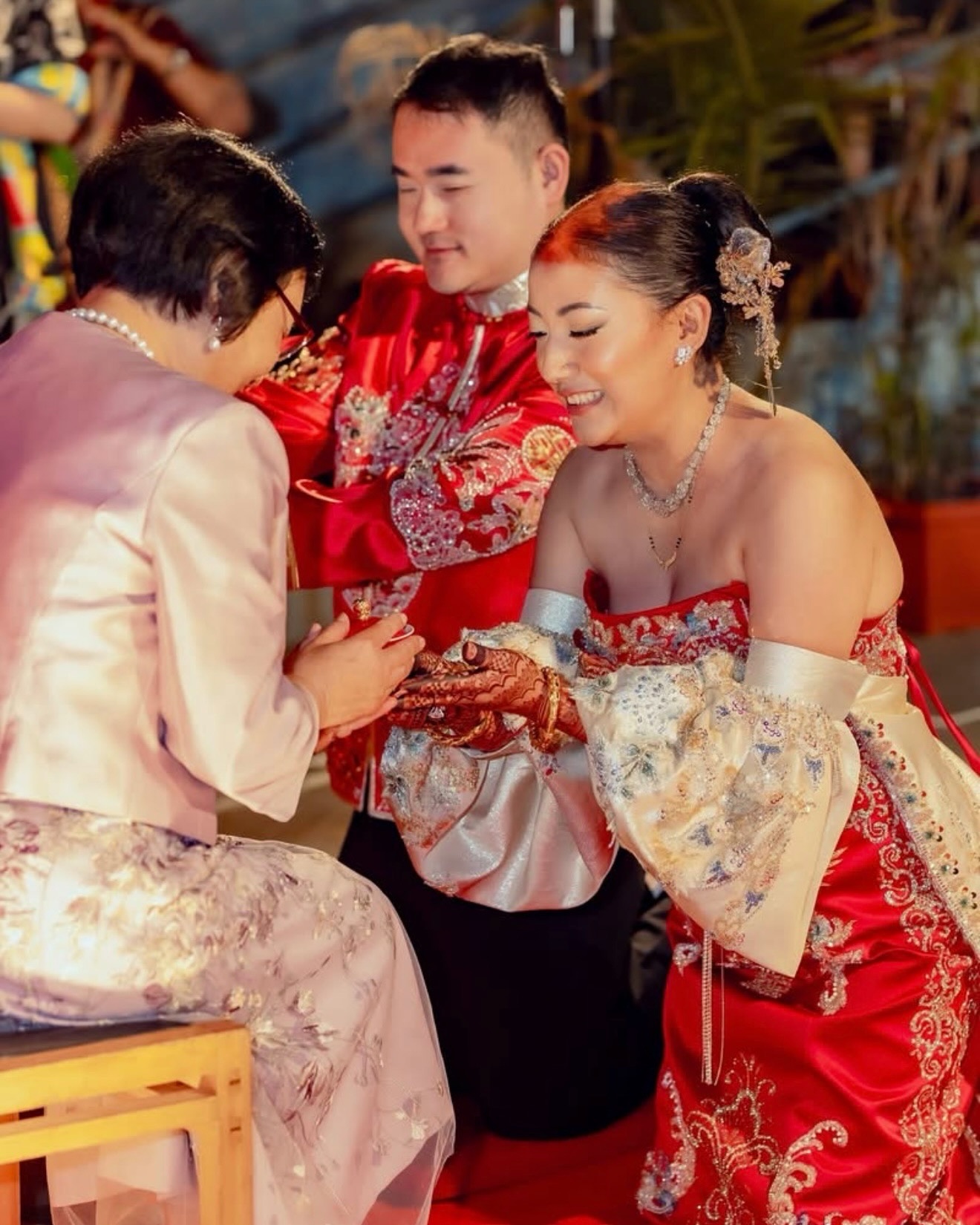
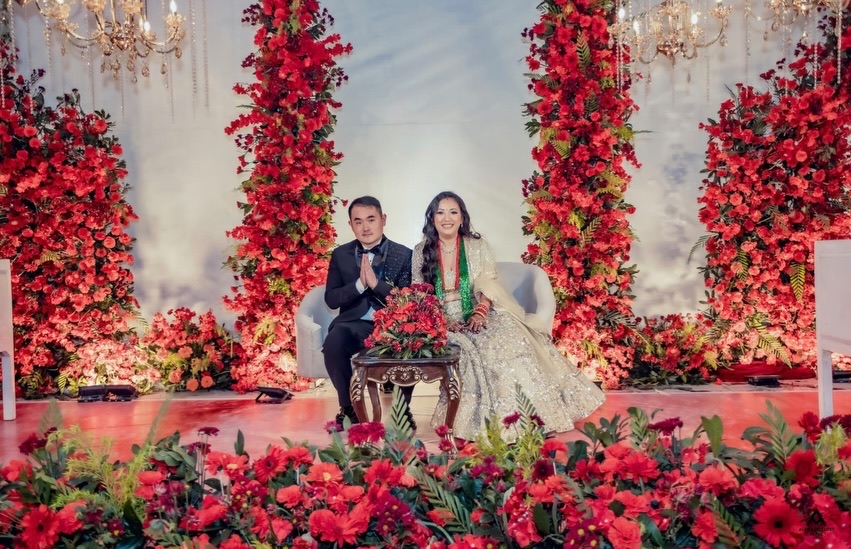
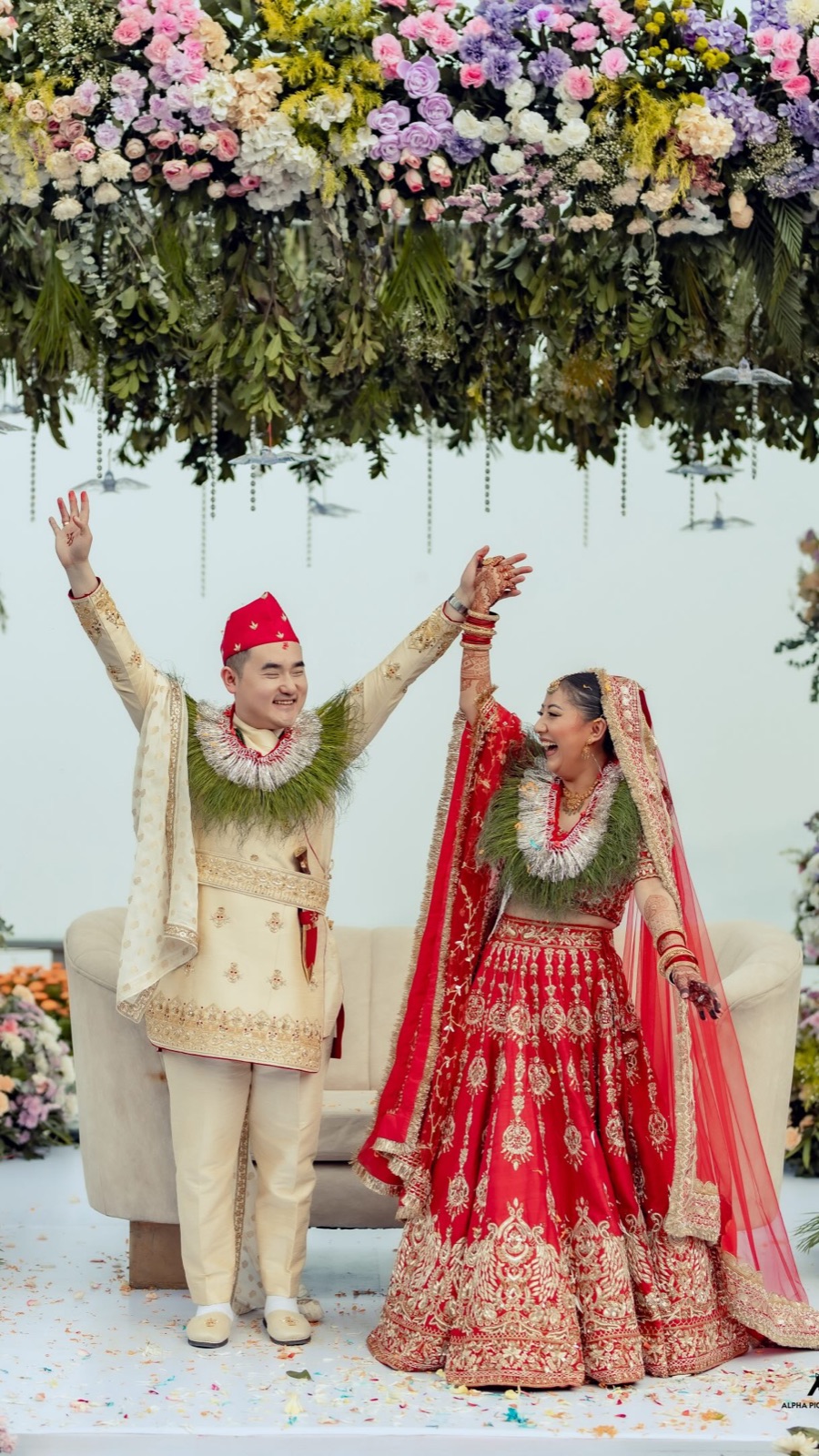
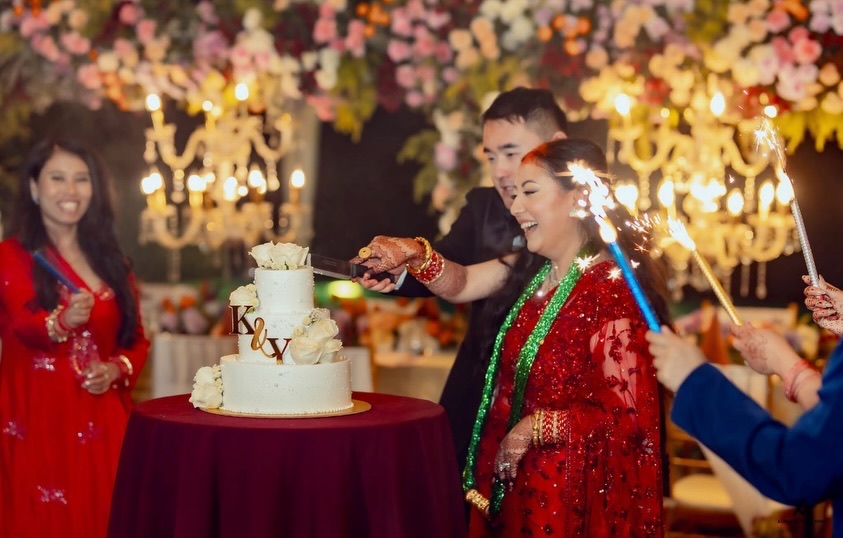
They planned four celebrations: a mehendi, a Hindu wedding followed by an intimate dinner, a Chinese tea ceremony, and a reception.
Finding venues for the mehendi and reception was relatively straightforward. For the mehendi, they chose Sa Sa Twa, celebrating against its traditional Newari backdrop. For the reception, Bouddha Heritage offered a convenient location in the valley and better value than the larger hotels she had considered.
The Hindu wedding and Chinese tea ceremony were another matter. With guests flying in from around the world, Kusum wanted a scenic property where everyone could stay together. But most premium resorts outside the valley insisted she book the entire property, rooms included. She wanted her guests to be comfortable, but she wasn’t interested in spending money simply for the sake of it.
She eventually found a beautiful resort at a more reasonable price, with a large front lawn she could use as she pleased, along with separate pool and event levels where guests could wander during the long wedding days.
It was basically just two of us against all of this.
By this point, the bride who had wanted the simplest possible wedding was beginning to have opinions about everything.
Before her first meeting with Garima Florist’s team, who would handle both planning and decor, Kusum sent over a twenty-page slide deck. She had Photoshopped images to show exactly where she wanted each element placed.
“They probably thought I was mad,” she says.
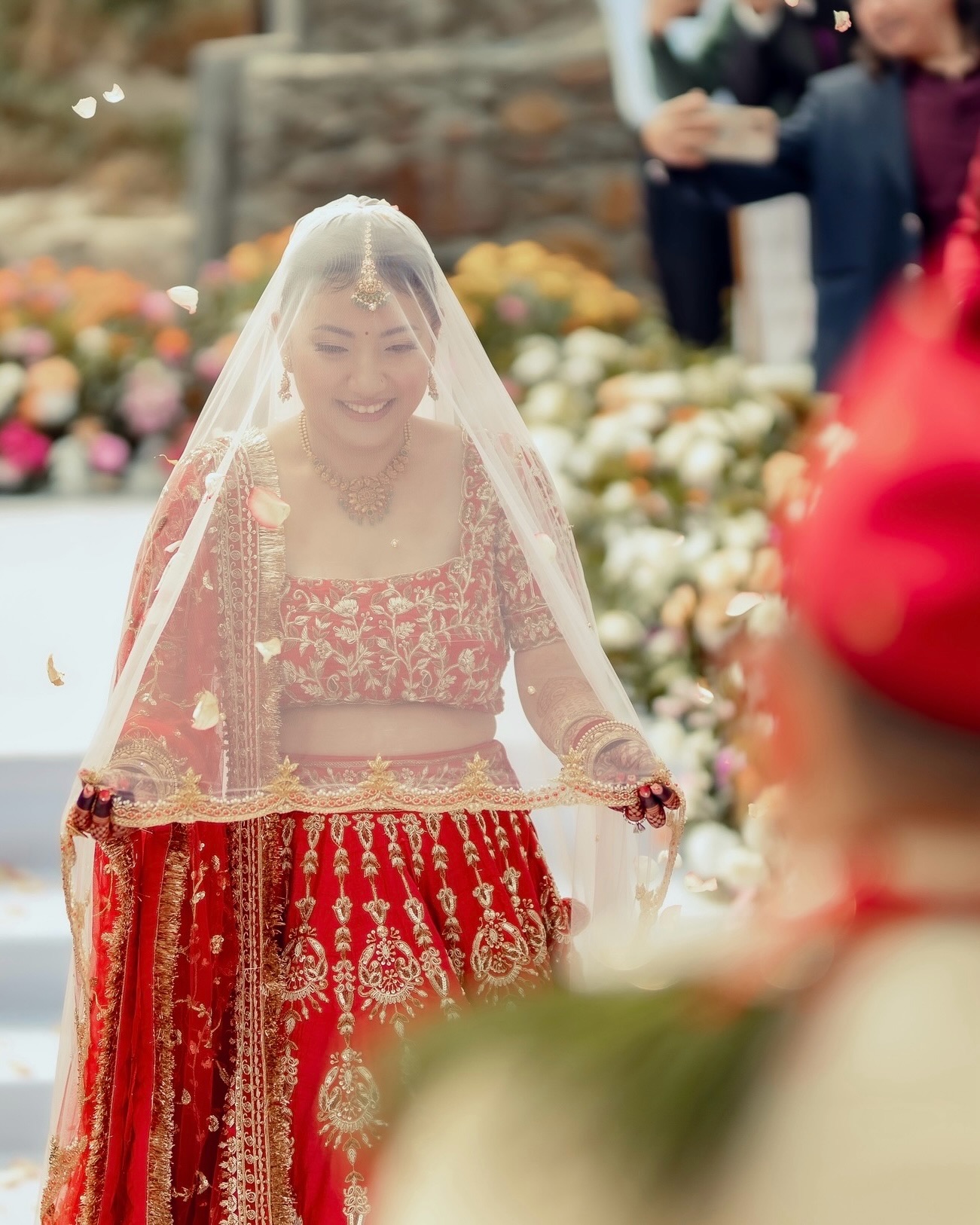
She wanted a long aisle. The venue suggested using the helipad instead. Kusum wasn’t convinced, and after working through the logistics, the team found a way to make her original vision work. For the Chinese tea ceremony, they built a set that looked almost identical to her sketches.
Garima was one of the more premium decor houses, but Kusum didn’t mind paying for a good product. The pricing was transparent, with no hidden costs. The one expense she hadn’t anticipated was transportation for the rented tables and chairs. The planners sourced them from a third party, and delivery came at an additional cost.
Her main gripe with the team, though, wasn’t that they couldn’t deliver. It was that they kept showing her things she hadn’t known she wanted.
“Don’t show me too much,” she remembers thinking, “because I’m going to want everything.”
And she usually did.
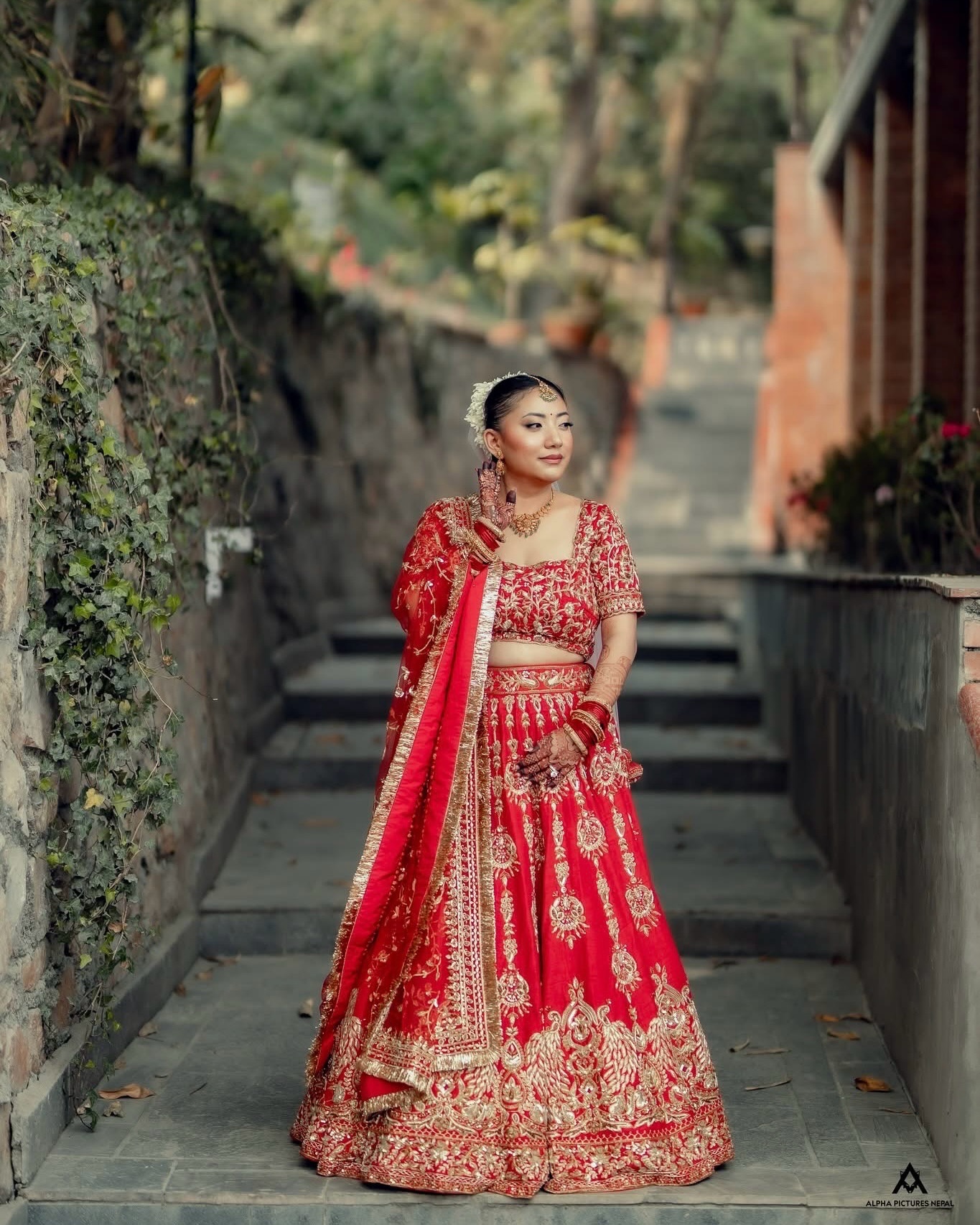
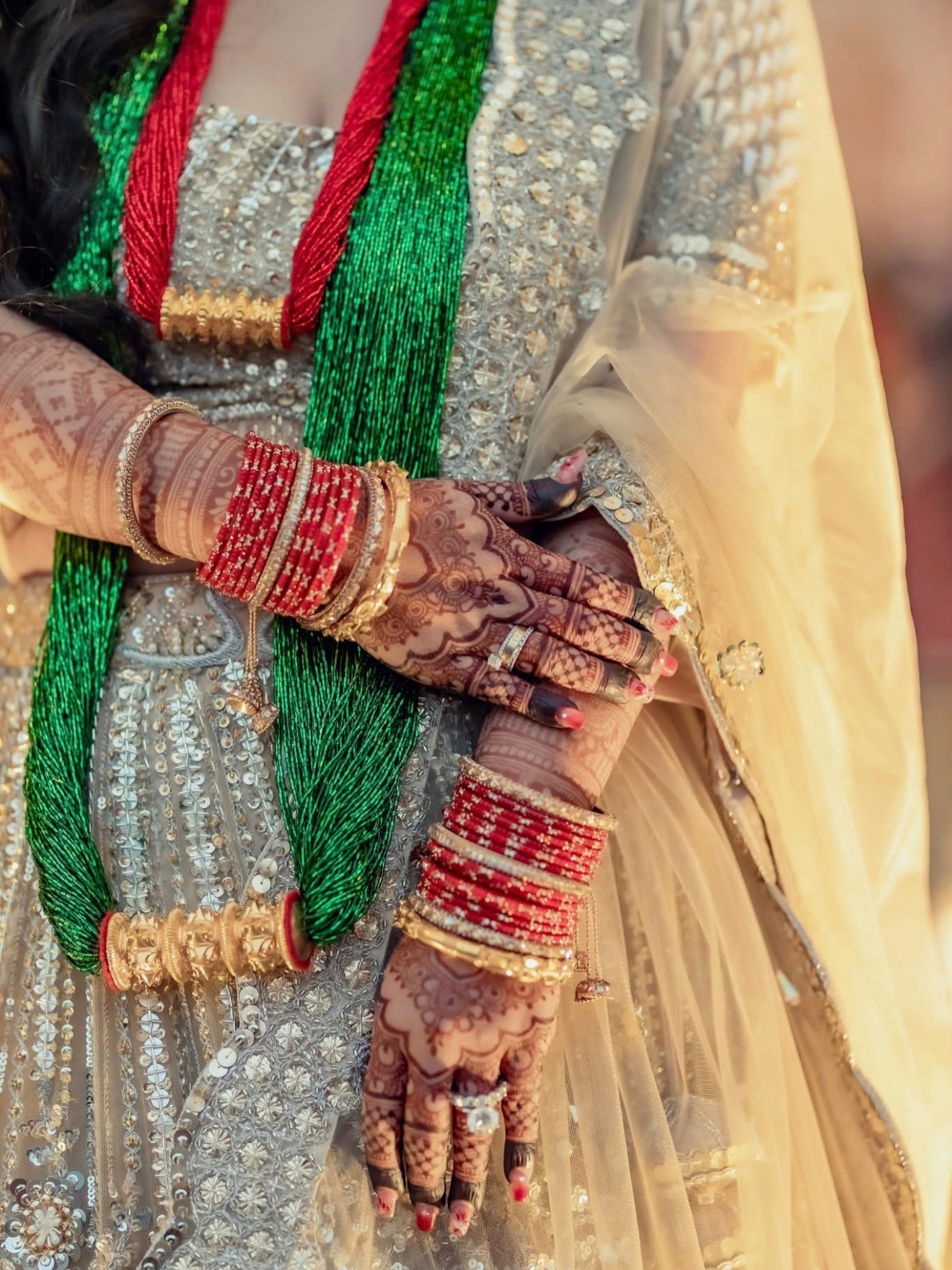
Her outfits became another exercise in getting things exactly right. Siwangi Pradhan made three pieces for her: a red lehenga for the Hindu wedding, a red saree for the intimate dinner, and a gold lehenga for the reception. Kusum lost twenty pounds before the wedding, which meant Siwangi had to alter her wedding dress five times. She did so patiently, and everything still arrived on time. Kusum remembers her as one of the loveliest people she worked with throughout the process.
Her makeup artist came through word of mouth, created three different looks across the celebrations, and became a friend in the process. Even the pundit came through an unexpected connection: her florist. Kusum chose him partly because he spoke some English, which meant her husband could follow the rituals without relying on her to translate. It helped that she could discuss the ceremony’s length with him beforehand. A Nepali wedding can last anywhere from three to ten hours, depending on the pundit.
Don’t show me too much, because I’m going to want everything.
For all her preparation, there were some things even a twenty-page deck couldn’t account for.
Months earlier, Nepal’s Gen Z protests had led to an interim government, and an election was now scheduled just days before her wedding. Kusum was due to fly in the first week of March, just as airstrikes began in the region. Her connection through Doha was canceled.
She scrambled to book a last-minute ticket through Hong Kong and arrived in Kathmandu to find soldiers on the roads ahead of the election. After eight months of planning from Connecticut, she had just three days on the ground for fittings, supplies, and final meetings with the venue and planners.
I was yes every single time.
Somehow, it all came together.
Looking back, Kusum can trace exactly how the wedding she never wanted became the one she planned. Every few weeks, someone would show her something a little nicer and ask the same question: this is the only time you’ll ever do this, do you want it, yes or no?
“I was yes every single time,” she says.
Perhaps that’s how a wedding you never wanted grows. Not through one grand decision, but a hundred smaller ones, each a little more elaborate than the last. Until the bride who wanted none of it finds herself at the end of a long aisle she insisted on having, surrounded by everything she said yes to.
And, presumably, a very happy mother.